THANK YOU FOR SUBSCRIBING
Weekly Brief
Be first to read the latest tech news, Industry Leader's Insights, and CIO interviews of medium and large enterprises exclusively from Healthcare Tech Outlook

Caelum Diagnostic Solutions
Pioneering Immediate Cancer Diagnosis for Optimal Surgical Results

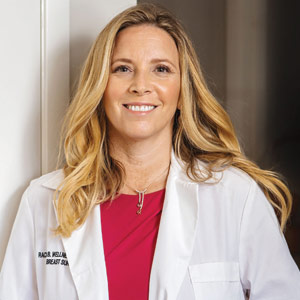 Dr Rachel Wellner, Co-Founder and CEO, Caelum Diagnostic Solutions
“Our team of oncologists, pathologists, engineers, patient advocates, and various other specialists is committed to delivering rapid and precise biopsy results, achieving approximately 20-fold accuracy compared to traditional methods,” says Dr Rachel Wellner, co-founder, and CEO of Caelum Diagnostic Solutions.
Wellner acknowledges that a patient's geographic location can significantly impact the speed at which biopsy reports are delivered. The conventional two-day processing time for these reports can prolong to ten or even fifteen days in remote areas, which can lead to serious treatment complications. This served as the foundation for the idea of accelerating biopsies to reduce the delay, ultimately contributing to CDS’s establishment.
Aside from being committed to addressing time constraints, CDS aims to solve the longstanding problem of organ damage caused by biopsies. Repeated needle insertions into a vital organ, such as the lungs, can cause hematoma and potentially lead to a lung collapse. CDS, with its advanced immediate feedback technology, the real-time pathology intraprocedural diagnosis (RPIDx™) reduces the number of biopsies, minimizes the risk of injury, and speeds up the cancer detection process.
The RPIDx analyzes the removed pathology sample, inspecting it for cancer. Its infrastructure is a mix of software and hardware capabilities; one of the primary hardware elements is fluorescence lifetime imaging microscopy (FLIM).
Equipped with a laser and specialized camera, this advanced digital molecular imaging device stimulates photons and calculates ratios of metabolites generated by cancer versus normal tissues, producing a molecular image.
The image is then subjected to interpretation by sophisticated AI and ML-based software. Remarkably, this non-ablative process that preserves the tissue’s integrity takes merely five minutes. Besides, the complete cancer detection process, which requires minimal operator expertise, is accomplished within ten minutes, positioning RPIDx as one of the most advanced and efficient tools in the oncology sector.
Leveraging this proprietary cancer detection methodology, we aim to offer a comprehensive analysis of the type, sensitivity, biology of the cancer that patients are affected with within a few years' time. This contributes to significant cost savings as detailed reports are typically associated with high expenses. The firm also improves treatment quality and overall patient satisfaction in hospitals that use its equipment to conduct cancer detection procedures, cementing its role in transforming cancer care. Alongside hospitals, CDS's customer base encompasses academic hospitals, cancer centers, community hospitals, free standing radiology clinics, medical and surgical offices performing biopsies, and dermatologists.
Our team of oncologists, pathologists, engineers, patient advocates, and various other specialists is committed to delivering rapid and precise biopsy results, achieving approximately 20- fold accuracy compared to traditional methods

While FLIM machines are common in academic research, they have not migrated into the clinical setting yet. This is an essential gap that CDS is determined to bridge with its proprietary prototype, which includes FLIM as its core technology along with several other important features, including automation and AI learning that will make rapid clinical analysis possible. The firm is making significant strides towards a brighter future for cancer patients with a laser-focused commitment to expediting biopsies and developing a safer, non-ablative, and time-efficient process for cancer detection. The RPIDx is currently in the pre-FDA approval stage and has achieved promising outcomes in animal trials. It is slated to enter human trials within six months, promising to carve out a results-driven, patient-centric path in oncology.
Company
Caelum Diagnostic Solutions
Management
Dr Rachel Wellner, Co-Founder and CEO, Caelum Diagnostic Solutions
Description
Caelum Diagnostic Solutions is an innovative medical device manufacturer committed to accelerating cancer treatment by providing instant diagnostic results for tissue biopsies, utilizing sophisticated AI and ML algorithms.