THANK YOU FOR SUBSCRIBING
Weekly Brief
Be first to read the latest tech news, Industry Leader's Insights, and CIO interviews of medium and large enterprises exclusively from Healthcare Tech Outlook
A featured contribution from Leadership Perspectives: a curated forum reserved for leaders nominated by our subscribers and vetted by our Healthcare Tech Outlook Advisory Board.

Tallaght University Hospital
Leveraging Digital Solutions to Support and Enable Patient Care
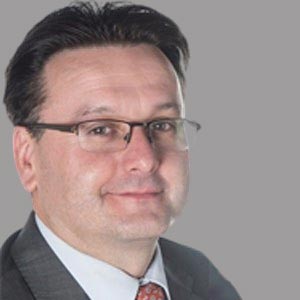
David Wall
Having worked in the Healthcare industry for more than three decades, David Wall has served in different roles including Director and Head of ICT, Information Governance Lead, and Application Support Manager for various hospitals. Wall has demonstrated an exemplary track record in strategic planning, quality improvement, change management, and operational management. Currently, Wall serves as a Chief Information Officer at Tallaght University Hospital (TUH).
Please share with our readers your key roles and responsibilities in the organisation.
As a Chief Information Officer at Tallaght University Hospital for the past eight years, I lead the business and digital transformation of our organisation. I, am responsible for the successful delivery of the Hospitals eHealth Strategy, “Digital Enabled Care”. Our eHealth Programme includes forty different projects spanning multiple work streams. At TUH we focus on enhancing patient care and experience, investment is focussed on five areas, Single view of the patient, Intelligence Led Healthcare, Seamless sharing of information with our partners, Access Anytime Anywhere and Patient Empowerment. Everything we do in the eHealth department is patient centric empowering and supporting the Hospital to deliver outstanding care. I am also the Executive Lead overseeing the Hospitals Electronic Patient Record (EPR) programme, Project Synergy. . The EPR represents the biggest Clinical Transformation Programme the Hospital has ever undertaken. In addition I also oversee the day-to-day operations of the ICT department ensuring ongoing ICT investments and that ICT systems and services are available to the right person, in the right place at the right time.
Each day is different and while you may have a plan for your day, this can change due to the unexpected challenges posed by eHealth. Being flexible, agile and responsive are key attributes for Healthcare CIO’s today.
On a typical day, I start by reviewing emails, this can be followed with sitting down with the eHealth project team to review the status of current projects, and mapping out new projects to bring through the eHealth approval process. I also meet regularly with my Digital Health Leadership Team to understand the challenges and pain points, strategise but also ensure we are keeping the lights on. As a team , our focus on delivering a high availability day-to-day ICT service so that people maintain their faith in ICT but ICT also demonstrate and patient and staff centric service delivery. Empowering and supporting your team enables staff to develop but also allows me as CIO to focus on what I need to.
Can you shed some light on the changes brought by technology adoption at your organisation?
Digital Technology continues to develop at speed. One of the significant things I have noticed is the proliferation of AI or what we call IA (Intelligence Assistance) in our hospital. Our clinical staff are seeking ways on how AI can support them. We believe that AI is not there to replace human workers but to support them. With the emergence of AI, people feared AI would replace human workers, in the last couple of years, we have completed a number of AI projects. One of the most notable ones is with the Stroke Thrombectemy Service, where AI helps clinicians to diagnose patients more quickly which in turn has cut down treatment and response times which is critical in an area where time equates to brain health.
“As a Chief Information Officer, you must always ensure, in your role, that you are listening, evolving and learning to ensure patients and your Healthcare organisation reap the rewards of implementing digital solutions to improve patient care, healthcare service delivery and support your colleagues”.
In terms of other digital advancements, a big shift and focus is happening around remote patient care. The availability of technologies and solutions in the cloud is great but the flip side is most companies are not always aware of the standards and regulations they must follow. One of the main challenges is finding the right balance between clinical staff that use technology to expedite processes and ensuring the solutions and technology meet legal requirements while supporting these innovative ways of working. It is well recognised that the healthcare workforce across the world is expected to be challenged over the next five to 10 years due to the staff leaving healthcare caused due to burnout, Covid, aging populations amongst other reasons. At a recent conference I attended in the USA, one startling statistic given was that a hundred thousand nurses have left the U.S. healthcare system in the last three years. There are similar trends seen in Ireland, where people are emigrating for a better quality of living, improved pay and conditions. Recognising this as a challenge, TUH has developed a programme called Releasing Time to Care, which focuses on digital technologies that make clinical staff's lives easier, give them more time with the patient ensuring the Hospital workforce works both efficiently and effectively. As part of Releasing Time to Care we introduced technologies such as Single sign-on, which saves staff time from logging into multiple systems with multiple usernames and passwords. We have also introduced other technologies such as medical device integration with electronic vital signs, we are also planning to implement unified clinical communications. . Every healthcare organisation has legacy technical debt, old systems, and manual processes, we have seen a lot of potential in Robotic Process Automation. With the implementation of this technology, we could free staff from most of the manual processes Robotics is another area of focus. TUH has implemented robotic surgery onsite. Worldwide this is being further developed where surgeons do not necessarily need not be in the same hospital to carry out surgery. TUH is planning to deploy robotics in our pharmacy service and look at other areas of the Hospital such as goods delivery and sample transport.
Can you shed some light on one of the biggest challenges facing healthcare?
There are many however Cyber Threats would be the main one. The Irish Health Service suffered a Cyber Attack in May 2021. . It has impacted a significant number of hospitals and healthcare agencies in the country. While TUH suffered some disruption, TUH was not directly attacked and did not suffer any loss of information. Cyber threat activity has increased significantly over the last two years healthcare reported as one of the primary attack vectors. With the proliferation of cloud and drive towards IOT and medical device integration, new challenges emerge all the time. There is also increased regulation across Europe with the planned introduction of the National Information Security Directive 2
What is your piece of advice to your fellow peers?
Firstly, would be to keep learning and evolving. As Chief Information Officers, we need to keep up to date with the latest technological developments and ensure our business skills are constantly enhanced. Second, is to understand the business at all levels and in all departments. This is essential to ensure the implementation of any digital technology benefits the organisation. My third piece of advice is to be open to innovation. Projects can take months to complete therefore being open to innovations helps us to deploy technologies worth applying which can lead to great collaborations. And finally, you need to invest in people and empower your team. Building relationship with fellow C-level suites and executives within the hospital is important for identifying our ideas and for securing funding but also support and empower your team so as to develop your talent pipeline.
The articles from these contributors are based on their personal expertise and viewpoints, and do not necessarily reflect the opinions of their employers or affiliated organizations.