THANK YOU FOR SUBSCRIBING
Weekly Brief
Be first to read the latest tech news, Industry Leader's Insights, and CIO interviews of medium and large enterprises exclusively from Healthcare Tech Outlook
A featured contribution from Leadership Perspectives: a curated forum reserved for leaders nominated by our subscribers and vetted by our Healthcare Tech Outlook Advisory Board.

Fresenius Medical Care
The Intersection of Patient Care and Sustainability
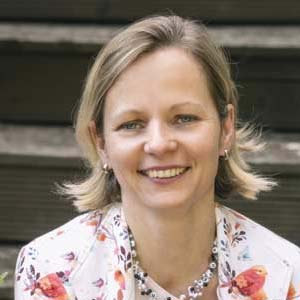
Vratislava Kovarova
Through this article, Vratislava Kovarova addresses the challenges of balancing patient care with environmental responsibility, particularly in light of new sustainability reporting requirements. Emphasizing the role of technology, including telemedicine, wearable sensors and predictive models, Kovarova expresses optimism about the future of healthcare. She underscores the importance of sustainable practices that respect both people and resources, aiming to create a more responsible and efficient healthcare system.
Medicine to Sustainability: Insights from a Nephrologist
That's an important question. It often sounds cliché, but it’s one of the most important things to consider. How we arrive at work we do, shapes who we have become and what we want. My journey began with an interest in psychology, but I ultimately pursued medicine at Charles University in Prague, which provided a strong foundation. I started my career in internal medicine at a district hospital, where the lack of staff helped me develop resilience.
How did I end up in nephrology? My interest in nephrology was sparked during a mandatory internship, where I was fascinated by the combination of technology, invasive medicine and internal medicine. Nephrology requires deep knowledge of the body's internal environment, and it offers unique opportunities to work with advanced devices like dialysis machines or bioimpedance-based machines.
After several years, I became the head of the nephrology department, which introduced me to management responsibilities, an entirely new discipline requiring new skills. Fortunately, Fresenius Medical Care (FME) provided me with the necessary management training, which I greatly appreciated and continued to benefit from when I later transferred to the Global Medical Office. In this role, I was responsible for patient safety in the Europe, Middle East, and Africa (EMEA) region. This role broadened my understanding of healthcare systems globally, especially during the COVID-19 pandemic.
My current focus on care quality, safety and sustainability at a global level has further expanded my perspective, emphasizing the importance of combining financial efficiency with social and environmental responsibility.
Balancing Patient Care and Sustainability
In most industries, environmental topics are the focus of sustainability efforts. Environmental considerations are also a pressing issue in health care, as resources like water and energy are required to provide medical products and treatment for patients.
An additional challenge is the emergence of new sustainability reporting requirements, such as the European Union Corporate Sustainability Reporting Directive (CSRD). Each member state of the European Union is required to implement it. Among other things, it requires large corporations to assess material topics and engage stakeholders.
In collaboration with my colleagues, we aim to improve data processes, identify commonalities, innovation opportunities, topics for advocacy and develop dedicated measures.
“Sustainability in healthcare means more than environmental responsibility; it requires preserving resources while putting patient care first and respecting the needs of all stakeholders.”
Educating employees and patients also plays a vital role in this regard. We all have to take responsibility for a healthy and sustainable future, and knowledge about health care management, prevention of chronic illnesses and climate change mitigation contributes to this.
Advancing Healthcare through Technology
Healthcare faces challenges such as the aging patient population, which increases patient vulnerability and thus the risk of morbidity as well as leads to greater complexity of care. I believe telemedicine and digitization are crucial for the future. I believe almost everyone at the beginning of last year heard the term large language models, which are used, for example, ChatGPT or Open AI. These generative technologies have great potential to alleviate the excessive electronic documentation that healthcare professionals currently struggle with, allowing healthcare professionals to focus more on direct patient care.
Of course, data privacy and proper legal regulations must be considered. Another element I’m excited about is wearable sensors. Whether it’s a sensor for measuring blood pressure, glucose levels or other parameters, it offers excellent potential for self-care and risk assessment.
As a nephrologist, I also closely monitor xenotransplantation and artificial kidneys. Although still under development, advancements in this field could potentially alleviate the current shortage of donor kidneys. Predictive models in healthcare also hold promise for cost-effective, patient-centered care.
A View on Innovation and Responsibility
My goals are aligned with the concept of sustainability as such. I aim to make decisions that preserve resources and involve those most affected by the processes. For me, this also means treating people with the respect they deserve, understanding their workload and always considering the needs of all stakeholders. I aim to contribute to a better world by focusing on sustainable practices. Therefore, my current focus is on staying current on sustainability topics and meeting all its requirements.
The articles from these contributors are based on their personal expertise and viewpoints, and do not necessarily reflect the opinions of their employers or affiliated organizations.