THANK YOU FOR SUBSCRIBING
Weekly Brief
Be first to read the latest tech news, Industry Leader's Insights, and CIO interviews of medium and large enterprises exclusively from Healthcare Tech Outlook
A featured contribution from Leadership Perspectives: a curated forum reserved for leaders nominated by our subscribers and vetted by our Healthcare Tech Outlook Advisory Board.

Director of Neuro Therapy Institute at DHR Health
Augmenting Patient Healthcare through Research and Innovation
As director of Neuro therapy at DHR Health, what are the particular trends and challenges in the marketplace that you’re currently observing in the industry?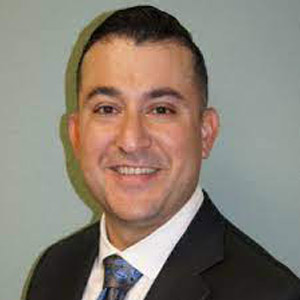
Michael Auer
As a director of a neural therapy clinic, I primarily work with neurologically impaired patients. The challenges here usually reside with insurance companies and their requirements that continue to change; the advantage of new Medicare plans versus traditional Medicare plans, and the limits on some of the insurance plans. Regardless of the diagnosis, some healthcare providers allow limited visits for the whole calendar year.
No matter if you have a hurt knee or a stroke or a spinal cord injury that has left you to be a quadriplegic and regardless of what we write or how we justify it. Certain insurance companies only give you a capped number of visits. This becomes a big challenge, as it is very limiting to the patients that need extra care.
In the work that you’ve been doing what are some interesting initiatives or projects that have come up that tackle these challenges?
I’m fortunate that DHR is very supportive and open to justifying the use of and embracing innovation and technology. Our facility hosts high-tech equipment like the ZeroG by Aretech and, more recently, the EksoNR robotic exoskeleton from Ekso Bionics. Employing these devices allows us to aggressively treat neurologically impaired patients by safely embracing the concepts of neuroplasticity, motor control, and motor learning while utilizing high repetitions and minimizing the use of compensatory strategies to execute the movement.
The EksoNR robotic exoskeleton is FDA-approved for the spinal cord, up to C-7 acquired brain injury, stroke, and now multiple sclerosis. We use this device to get patients up on their feet and take more steps than they would have done using traditional methods in parallel bars or with a walker. Patients can get on the machine and take up to 500 steps, helped by a couple of therapists, while being protected from any potential physical damage. It enables good body alignment, quality steps, and no compensatory strategies with high repetitions, driving neuroplasticity for improved outcomes. We are seeing fantastic results with our patients, specifically for spinal stroke treatment.
"Michael Auer, Director of Neuro Therapy Institute at DHR Health"
The ZeroG device is a track system of about 100 - 150 feet with a robotic trolley that can accommodate patients up to 400 pounds. As the patient walks, it tells us whenever they lose balance to the left or the right, and based on the amount of torque that’s pulled on that cord, it can differentiate between what might have been a loss of balance or result in a fall. It can also give them spontaneous perturbations while they’re walking or just standing to test their balance. Another mode leads the patient forward, which encourages them to take a faster gait sequence when they’re walking. It ultimately generates a detailed report that we can send to insurance companies to let them know how the patient is doing.
The new equipment has been a real game changer, especially with the restrictions that insurance companies put upon us—they want us to do more in less time. We have to accomplish goals with fewer staff to ensure our profit margins are where they need to be. So, while these pieces of equipment might be more expensive on the front end, it requires less staff to operate them and helps us stay under the budget and generate better results quickly. Our therapists also benefit from these machines, as they do not have to use traditional methods, lessening the constant strain on their bodies.
I’m excited that the DHR allows us to bring technology and innovation to the table so we can continue giving our patients the best in physical care, which was unheard of before. We’re based in South Texas, which was an entirely underserved area, and we are now on the same level as Dallas or Houston. The credit goes to the technology, innovation, and equipment, not to mention the highly trained staff that are soon to get certified and become better skilled in treating neurological and orthopedic patients.
Are there any new solutions or new changes that are coming up, which you’d like to share?
Since we recently purchased the EksoNR, our staff are due to be trained in using the machine. Our official training course for this device through the company of Ekso Bionics starts this coming week. As a certified individual, I will be taking a test and start training another therapist as the course begins, which makes a total of five trainees in this program.
Training more staff allows us to help more patients. One certified therapist can serve a max of eight patients in a day because we do one-on-one therapy. The more trained and certified personnel we have on this device, the more patients we can reach and have a greater impact on delivering better outcomes.
Starting research using the EksoNR is the next stage of the plan, specifically for stroke, head injury, and multiple sclerosis (MS). We are in touch with an MS neurologist who is interested in collaborating with our organization. Our research institute and institutional review board allow us to delve into experimental studies, and we are currently in the process of trying to come up with a research hypothesis that we can take to the board and research specifically for this device.
Our goal is to contribute to the greater body of research. To keep our therapists engaged in research and the use of new and innovative technology. Because, while the work we do with patients is very important, contributing to the larger knowledge pool helps push the boundaries of medicine forward. Research enables other people to get exposed to what we are doing. It lets other therapists learn of new techniques and procedures we’re developing—what’s working and what’s not. Coming out of this small town in South Texas, this is very exciting news.
Any concluding thoughts about how you feel the industry should evolve going forward?
I used to work at an inpatient rehab facility, where patients are kept overnight. Currently, I’m working at the outpatient neuro clinic where patients come from home to undergo therapy.
In my opinion, more patients should be able to walk into neuro-specialty clinics like this. Patients with access to inpatient rehab facilities can establish a good strong foundation before they come to outpatient facilities. Because in inpatient rehab patients are provided a minimum of three hours of therapy a day, guided by highly trained nursing staff and physiatrists. They usually have innovative equipment and offer intense therapy five to seven days a week, three hours a day at minimum. This would not have been the case if these patients had gone to a skilled nursing facility (SNF), or opted for home health.
Undergoing that type of regimen before they come to an outpatient clinic gives us more leverage to get the patients where they need to be within the time constraints that insurance companies lay upon us. Certain insurance companies make it very hard for patients to qualify for inpatient rehab facilities because it’s cheaper to send them to an SNF. Oftentimes, patients do not understand that their insurances limit their access to these amenities, which significantly impedes their recovery progress. As our organization fights for these services and legislators, state representatives, and senators become more knowledgeable about these issues, patients start to benefit from it.
Research has proved that inpatient rehab facilities have a bigger impact than SNFs for these neurological conditions. When they come to us in the outpatient division downstream, we’re able to optimize their function and their progress, taking them a step closer to getting them back into the community. While these are things that I think are the prevalent problems, there are definite solutions for these issues to improve access for the patient. To help them take advantage of all this technology and innovation so they can improve their function and be an active member of their community.
The articles from these contributors are based on their personal expertise and viewpoints, and do not necessarily reflect the opinions of their employers or affiliated organizations.