THANK YOU FOR SUBSCRIBING
Weekly Brief
Be first to read the latest tech news, Industry Leader's Insights, and CIO interviews of medium and large enterprises exclusively from Healthcare Tech Outlook
A featured contribution from Leadership Perspectives: a curated forum reserved for leaders nominated by our subscribers and vetted by our Healthcare Tech Outlook Advisory Board.

Houston Methodist
PowerPoint: The Ultimate Tool for Turning Complex Ideas into Bullet Points
Jim Cook, MBA, MT(ASCP)DLM, is a seasoned professional with over 40 years in laboratory medicine. He has held leadership roles at healthcare systems, including the University of Maryland Medical System and Southeast Georgia Health System. With lab management, cardiology, and infection prevention expertise, Jim holds a BS in Medical Technology and an MBA. He has published over 30 articles and is active in professional organizations.
Jim Cook
Through this article, Jim Cook, Senior Director of System Laboratory Services at Houston Methodist, emphasizes the transformative role of PowerPoint in modern business communication. He traces its evolution from the pre-PowerPoint era of typed reports to its current status as the Universal Business Language, highlighting its ability to simplify complex ideas, foster collaboration, and convey strategies visually. Cook acknowledges criticisms of PowerPoint but argues that its effectiveness depends on the user, not the tool. He also explores emerging trends like interactive presentations and AI-driven tools, envisioning a future where communication becomes more efficient and dynamic.
Effective managers must embrace PowerPoint to demonstrate value and facilitate strategy implementation within their organizations. Humans are inherently visual and auditory creatures, and PowerPoint leverages this instinctual preference, making it a powerful tool for business communication. My experience spans the pre-PowerPoint era when communication relied on typed reports in three-ring binders—a far cry from today’s dynamic presentations. Microsoft released PowerPoint 1.0 in 1987, initially for Macintosh, revolutionizing how we convey ideas.
"PowerPoint is the Universal Business Language, with over a billion installations and a 95 percent market share. Its ability to simplify complex ideas and foster collaboration is undeniable."
The transition to visual representation was gradual. Early on, managers used tools like Harvard Graphics to create content, which was then printed, photographed, and developed into 35mm slides—a cumbersome process. Overhead transparencies, Elmo projectors, and whiteboards offered incremental improvements, but the real breakthrough came with direct computer-based projection. This shift made visualization accessible, efficient, and affordable, paving the way for mass adoption.
PowerPoint’s true potential emerged when leaders began using it for external purposes—lectures, marketing, pitches—and internally to convey strategy and concepts. Visualization became a succinct way to express complex ideas, summarize data, and present abstract concepts through tables, graphs, flowcharts, and images. As the saying goes, “A picture is worth a thousand words.” PowerPoint’s ability to simplify and communicate intricate ideas made it indispensable.
In a practical sense, PowerPoint can be called the Universal Business Language. It has become synonymous with “presentation.” PowerPoint’s proliferation—potentially over one billion installations and 95 percent market share translate into more than 30 million presentations daily. It is heavily used and studied in the military, education, training, and consulting, but has also become prevalent in all aspects of business activities. Managers use PowerPoint to create, socialize, and commercialize ideas within an organization. Visualization techniques facilitate the organic creation of an idea and can be shared and refined easily by getting input from disparate groups familiar with PowerPoint because of its prevalence.
The creation and revision of slide decks can feel endless. In some organizations, PowerPoint dominates the workflow. Consulting engagements, once centered on extensive written reports, now produce large PowerPoint decks as the primary deliverable. Mastery of this medium is essential for modern professionals.
Reflecting on my early career, word processors didn’t exist. Memos were the primary means of communication, and a well-crafted memo could drive an entire division. The advent of Word Perfect and Microsoft Word transformed business writing, and email eventually replaced memos altogether. Similarly, spreadsheets like Excel became vital for data analysis but never gained traction as a presentation tool. PowerPoint, however, has become the dominant medium for conveying ideas.
Despite its ubiquity, PowerPoint has its critics. Steve Jobs famously said, “People who know what they’re talking about don’t need PowerPoint.” Yale professor Edward Tufte criticized it as “loud, very slow, and very simple.” Even Winston Churchill’s quip, “If this is a blessing, it is certainly very well disguised,” is rumored to reference PowerPoint. However, the issue lies not with the software but with its users. Poorly designed or misused presentations are the fault of the presenter, not the tool.
The future of business communication will undoubtedly evolve. Tools like Prezi allow zooming in and out of content, and Menti, which facilitates live audience interaction, is already pushing boundaries. Word clouds, animations, videos, and audio enhance presentations, shifting focus from the presenter to the content. Artificial intelligence is also making inroads, with large language models capable of creating, editing, and distributing PowerPoint presentations. Soon, AI may condense lengthy decks into a single meme, revolutionizing efficiency and effectiveness.
PowerPoint’s journey from a novel tool to the Universal Business Language underscores its transformative impact. While criticisms exist, its utility in simplifying complex ideas and fostering collaboration is undeniable. As technology advances, so will the ways we communicate, but PowerPoint’s legacy as a cornerstone of business communication is secure.
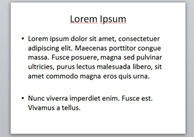
Figure 1: My first Auto-content PowerPoint slide
The articles from these contributors are based on their personal expertise and viewpoints, and do not necessarily reflect the opinions of their employers or affiliated organizations.