THANK YOU FOR SUBSCRIBING
Weekly Brief
Be first to read the latest tech news, Industry Leader's Insights, and CIO interviews of medium and large enterprises exclusively from Healthcare Tech Outlook
A featured contribution from Leadership Perspectives: a curated forum reserved for leaders nominated by our subscribers and vetted by our Healthcare Tech Outlook Advisory Board.

Edward-Elmhurst Health
Navigating Leadership and Innovation in Radiology
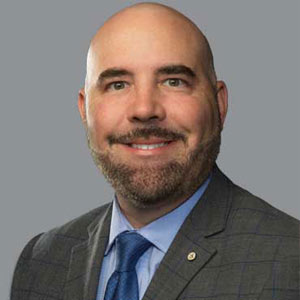
Ryan Garland
Ryan Garland is an experienced Radiology/Imaging Administrator with a demonstrated history of exceeding financial, customer service and quality initiative goals. He is a strong program and project management professional with a Master of Healthcare Administration.
Garland Began working as an X-ray Tech in 2001 and have held several leadership roles while climbing the corporate ladder. Currently, he serves as AVP for Radiology & Respiratory.
Garland’s Key Experiences and Milestones
I believe the most impactful milestones in my career have come from proactively seizing opportunities when I recognized a void. Whether it was a boss who left or a gap in knowledge/data, understanding what executives need/want to see before being asked. Why wait to be told? If I know what’s coming, I prefer to get ahead of it which helps me prepare by giving me more time. There are many competing priorities so when a large scale request comes your way and you already have a head start on it, it’s a great feeling. I try to put myself in my boss’s shoes and ask what would I want from me? I see so many leaders just provide the minimum of what was asked instead of knowing what the next question will be and answer it. I like to know, why do they need this data, what are they going to do with it, who’s the audience, etc.; then ask myself those questions as I’m preparing. Putting that extra work in upfront actually makes me more efficient in the long run.
Addressing the Challenges in the Radiology and Respiratory Fields
Like most fields in healthcare organizations, our biggest challenges today are staffing, increased costs and decreased revenue. The Chicago market is extremely competitive and there is a known supply/demand deficit for talent. We felt effects of the great resignation and saw COVID take its toll on healthcare jobs. Young adults who are navigating their way through finding a career don’t see the appeal to be a frontline healthcare worker. Who wants to be a frontline clinical worker after seeing what COVID did to healthcare? We’ve seen declines in admission rates for our local allied health programs which paints a daunting future. We need to get in front of this and make healthcare lively again. As such, we have recruitment efforts focused on high school students who are still deciding what to do with their lives. We know it's not going to help immediately however just like I said before, this extra work will pay off. This will help improve our future pipeline which is currently dwindling. I read a recent article from ASRT (American Society of Radiologic Technologists) demonstrating the nationwide supply and demand issue. Vacancy rates were at 18.6 percent! This jumped from 6 percent in 2021. This coupled with inflation and a newer workforce who demands competitive pay leads to a tough market. Employer loyalty has taken a step back, employees are demanding what they believe they are worth and if you can’t figure out a way to compensate them accordingly, they will find it elsewhere- even if that means agency. We now must collaborate and compete with agencies. One way we’ve accomplished this is by creating our own internal agency where we cut the middleman out and create our own gig style work at a higher rate of pay / less benefits.
Effective Strategies to Improve Patient Engagement
We have always monitored patient experience however patient expectations have changed and continue to evolve. Reading comments from real patients and discussing them with our staff has proven effective and beneficial with improved scores. It used to be that having the smiling, helpful, competent, empathetic caregiver was enough however that is an expectation now. To be relevant now patients are demanding more than that. Access, price transparency and same day results are a few of the initiatives we believe set us apart. We even have patients ask us about our equipment.
“Know how your team fits into the mission and know what your team needs to succeed. The rest will come naturally”
We also have a PFAC (Patient, family, advisory council) where former patients and families of patients provide feedback and even help with decision making! We have been hovering at the 95 percentile for our outpatient PressGaney patient satisfaction scores.
Innovative Leadership Techniques in Radiology and Respiratory Care
Staff have to have skin in the game to mutually benefit. Transparency and understanding why and how do “I” fit in with said objective is key. We have many competing priorities – even quality and financial objectives often compete. It’s finding that sweet spot where both can benefit or at least be cost neutral..
Impact of Advancements in Radiology and Imaging Technologies
AI will definitely have the most impact. We are evaluating several options however there are so many companies that provide similar offerings it’s difficult to navigate and choose. Of course price comes into play however pricing aside, it’s hard to know which one will survive or outlast. In general I believe the technologies that make us more efficient at what we do. Whether its shaving table time off MRI’s or decreasing dictation times for radiologists, these forms of AI will prevail. None of them are going to replace people- just make us more efficient at what we do.
Garland’s Advice to Healthcare Professionals Aspiring to Advance into Leadership Roles
I believe Leadership is something you either posses or you don’t. It’s not really something you can teach. Of course, we can learn how to be better leaders and grow as leaders however the root skill itself is typically inherent. If you’re thinking about being a formal leader, you are likely already an informal leader. People already look to you for help and ask you questions. That’s because you already have a desire to help people and obtain gratification from helping and watching others succeed. This is the leader of today’s world- a servant leader. One who helps for the good of the mission. There isn’t really a cookie cutter leadership style out there. I have seen many different successful leadership styles. Classes that claim to teach you to be a good leader are typically gimmicks. The best thing you could do to be a formal leader or grow as a leader is to understand who you are and how you’re perceived. Often times there is a disconnect there so knowing your strengths and weaknesses and/or areas of opportunity are key. It allows you the ability to curtail your style to the different audiences. Know how your team fits into the mission and know what your team needs to succeed. The rest will come naturally. The best leadership class I attended took a deep dive into our personalities and taught more emotional intelligence than anything else.
The articles from these contributors are based on their personal expertise and viewpoints, and do not necessarily reflect the opinions of their employers or affiliated organizations.