THANK YOU FOR SUBSCRIBING
Weekly Brief
Be first to read the latest tech news, Industry Leader's Insights, and CIO interviews of medium and large enterprises exclusively from Healthcare Tech Outlook
A featured contribution from Leadership Perspectives: a curated forum reserved for leaders nominated by our subscribers and vetted by our Healthcare Tech Outlook Advisory Board.

UC Health
Patient Safety Awareness Spotlight: Find out why "Time Outs" are a best practice for procedures at UC Health in Greater Cincinnati.
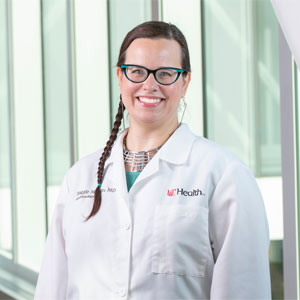
Maggie Mechlin
As the Greater Cincinnati region’s only adult academic health system, UC Health is driven by the fact that patient safety improves organizations like theirs that are committed to putting empathy, integrity, and, most importantly, the patient first. All UC Health employees and clinicians play a crucial role in supporting and advancing UC Health’s culture of safety.
In honor of Patient Safety Awareness Week (March 2023), UC Health spotlighted their pre-procedure surgical Time Outs as an important best practice with a hands-on (or rather, hand-holding) approach.
The Joint Commission confirms the universal protocol/national patient safety goal for surgeries that guides healthcare professionals consists of the following three steps:
1. Conducting a pre-procedure verification process
2. Marking the procedure site
3. Performing a Time Out
Time Outs are used as an intentional time for the surgical team to pause before the procedure begins and after the procedure is complete to make sure all are on the same page, including the patient, surgical site, and procedure on the docket. Additional benefits of surgical Time Outs include the following:
• Improving the accuracy of patient identification
• Improving the effectiveness of communication among caregivers
• Reducing the risk of healthcare-associated infections
• Identifying safety risks inherent in its patient population
 A hand-holding time-out is one way to ensure that every member of a surgical team is focused on the time-out process. This includes every clinician and employee in an operating room during a surgery (E.g., surgeons, nursing, anesthesia, etc.). UC Health surgical teams have implemented a unique approach to decrease the risk of distraction during the time out process.
UC Health’s clinical teams recognize the importance of surgical “Time Outs.”
It is important to ensure we do things (like Time Outs) the same way every time with simple and complex surgeries. The Time Out before complex cases is especially helpful as there are often unique surgical approaches, techniques, medications, and monitors that may be required before, during, and after surgery. Pre-emptive, structured communication by having everyone on the same page about other team members’ needs and roles makes the surgical case flow efficiently.
-Matthew C. Wallace, MD, Director of Cardiac Anesthesiology and Anesthesia Simulation at UC Health
A Time Out allows everyone in the OR to focus on the process by holding hands and stopping all other activities. We do this out of respect for the patient and the importance of the operation. The Time Out allows us to collectively confirm important information about the patient, the operation, safety measures, and things like anesthesia considerations. As the primary surgeon, during the Time Out, I comment on specifics related to the case that will be important and allow the personnel to be ready. We also go around the room so everyone knows who everyone is and their role. Every role is important.
- Shimul Shah, MD, Division Chief of Transplantation and Vice Chair of Health Services Research at UC Health, and the James and Catherine Orr Endowed Chair of Liver Transplantation at the UC College of Medicine
About UC Health
UC Health is an integrated academic health system serving the Greater Cincinnati and Northern Kentucky region. Partnering with the University of Cincinnati, UC Health combines clinical expertise and compassion with research and teaching, providing patients with options for even the most complex situations. Members of UC Health include UC Medical Center, West Chester Hospital, Daniel Drake Center for Post-Acute Care, Bridgeway Pointe Assisted Living, University of Cincinnati Physicians and UC Health Ambulatory Services (with more than 900 board-certified clinicians and surgeons), Lindner Center of HOPE and several specialized institutes and centers, including the UC Gardner Neuroscience Institute and University of Cincinnati Cancer Center. Many UC Health locations have received national recognition for outstanding quality and patient satisfaction. Learn more at UCHealth.com.
The articles from these contributors are based on their personal expertise and viewpoints, and do not necessarily reflect the opinions of their employers or affiliated organizations.