


THANK YOU FOR SUBSCRIBING
Weekly Brief
Be first to read the latest tech news, Industry Leader's Insights, and CIO interviews of medium and large enterprises exclusively from Healthcare Tech Outlook
Healthcare Tech Outlook: Specials Magazine
Adventhealth
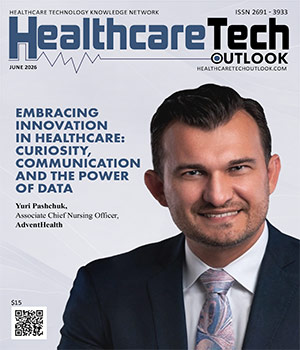
Embracing Innovation in Healthcare: Curiosity, Communication and the Power of Data
As leaders in healthcare, I can confidently say we must be prepared for any questions that come our way. Being prepared doesn’t mean we always have the answers, it means being willing to ask enough questions to understand where the answers may lie. To say that healthcare is changing fast would be an understatement. Advances in technology and innovation are being woven into the healthcare space at a rate never seen before. With an increased focus on the patient experience, healthcare systems are exploring digital tools to bridge communication gaps, remove barriers to care, and enhance how we support our patients using AI and data. One of the most impactful approaches to improving the patient experience has been implementing data-gathering tools. These tools allow leaders to document patient visits, identify opportunity areas, and track recurring concerns. This information helps uncover patterns, whether localized to a specific unit or indicative of broader system-level issues. Global themes are escalated to senior leadership, where strategic changes can be made to improve care delivery across the organization. At the bedside, innovation has led to the introduction of tablets that give patients direct access to their test results, provider notes, and even two-way chat with the care team. Smart room technology is transforming how we deliver specialty care by removing the need for physical transfers. Now, patients can be seen virtually by infectious disease specialists, neurologists, or endocrinologists—right from their hospital room. These advancements are breaking down access barriers for community hospitals, bringing services traditionally reserved for large academic centers into local facilities.
Medical Imaging
Zebre
Optimizing Medical Imaging at the File Level
Bryan Stunkel, Co-Founder | Chairman & President, Brent Savoie, MD/JD, Director, Clinical & Regulatory Strategy, Joe Christopher, Fractional CTO, Technology & Platform Strategy, Dan Karl, Go-to-Market & Commercial Scale Advisor
What challenges in medical imaging storage led to Zebre’s file-level optimization approach development? Bryan Stunkel, co-founder of Zebre, has over 20 years of experience modernizing and supporting deployments of healthcare data storage, protection, and cloud-based infrastructure architectures. Over that time, he observed the expansion of imaging volumes and the emergence of Digital Imaging and Communications in Medicine (DICOM) files as the standard for storing, transferring, and archiving clinical images. As file sizes grew rapidly, healthcare providers kept investing in storage and infrastructure, often without a practical alternative. Stunkel stepped back, recognized the pattern, and pursued a file-level approach that optimizes DICOM data. Zebre is the result of that insight. It is a medical imaging discovery and optimization platform that reduces DICOM storage needs by 40 to 50 percent while preserving diagnostic integrity. “For the first time, DICOM can be optimized at the file level; completely agnostic of storage and PACS platform(s),” says Stunkel. How does Zebre integrate with existing PACS environments without requiring system replacement efforts? His idea took shape in 2020 through a collaboration with the vice chairman of radiology at an academic medical center in Nashville, TN. Together, they authored patented methods for solving the problem of caching, storing, and managing large DICOM datasets that became the company’s foundation. At the Radiological Society of North America (RSNA) annual meeting in Chicago, feedback on the platform’s capabilities was striking: “You’re the only ones doing this.”

Healthcare AI

What challenges do patients face when following care plans after clinical visits? “Around 80 percent of patients leave a clinical appointment unsure how to follow their care plan at home,” says Darren Booker, CEO of Tali Health. The issue is not the quality of care inside the clinic, but what happens afterward. Patients leave the visit with confidence, but then they forget or misremember details about symptoms, medications, home-care instructions, or follow-ups. This leads to repeated calls and portal messages for care teams, or worse—patients turning to sources like Google or generic AI tools that lack their care plan details and clinical context. At the same time, care teams lose visibility once the patient leaves, creating gaps in adherence, missed signals, and avoidable escalations or readmissions. Tali Health is built to address this breakdown. It is a clinically governed AI platform that reinforces care plans between visits, helps patients navigate routine questions at home, and surfaces clinically meaningful signals back to care teams for timely intervention. Turning Between-Visit Gaps into Actionable Signals How does continuous monitoring transform patient activity into actionable clinical signals? In specialty and primary care, Tali Health helps reduce inbound noise by resolving routine patient questions on demand. Tali also converts patient activity between visits into a continuous signal layer for care teams. Symptoms and vitals such as blood pressure and glucose levels are evaluated against clinician-defined triage thresholds and individual care plans. The system filters this information, identifies deviations, and surfaces escalation signals to the care team when intervention may be needed. This allows care teams to act earlier without being overwhelmed by non-critical patient questions or unnecessary follow-ups. The platform does not diagnose or treat patients. Every interaction is aligned to assigned care plans and clinician-defined guidance, and Tali is embedded within EHR workflows such as Epic and athenahealth to ensure providers remain informed and in control without disrupting their day-to-day operations. In chronic care management (CCM) and remote patient monitoring programs, the same system drives operational and financial gains. Tali Health surfaces real-time signals that help care coordinators reach the right patients at the right time—reducing time spent cold calling, increasing successful patient contact, and improving capture of billable clinical time. It also prompts patients to initiate contact, creating more timely inbound engagement that increases reimbursement revenue while improving patient satisfaction.
Medical Practice Management
RevSuite Solutions
Solutions Bringing Medicaid Management Back In-House
William “Bill” Booth, President, Katina “Tina” Booth, VP of Sales and Revenue
RevSuite Solutions provides Medicaid pending management software for skilled nursing facilities, helping providers bring structure and visibility to a process that has historically been fragmented, manual, and difficult to manage internally. For nearly 30 years, Katina “Tina” Booth worked in Medicaid financial operations within skilled nursing environments, where she witnessed firsthand how missed recertifications, delayed approvals, incomplete documentation, and changing state requirements could quietly create significant revenue loss for providers. Business office managers often relied on spreadsheets, folders, sticky notes, and disconnected systems to track applications, authorizations, resident documentation, and state-specific requirements while trying to keep pace with changing deadlines. Existing solutions either lacked operational depth or required providers to outsource large portions of Medicaid management, in some cases paying outside agencies up to $1,500 per Medicaid application. Determined to create a provider-controlled solution, Tina partnered with her husband, William “Bill” Booth, who brought more than 35 years of experience in software development and cloud-based systems to build RevSuite Solutions. Having spent decades leading software initiatives and working alongside hundreds of developers, Bill was able to assemble an elite development team to help bring RevSuite’s vision to the skilled nursing industry. The platform gives business office managers a centralized way to manage in-house Medicaid workflows while reducing reliance on costly outside agencies and freeing up more resources for resident care. “Facilities needed a way to manage Medicaid internally with clear visibility into every case instead of relying on fragmented processes and outside vendors,” says Katina Booth, VP of sales and revenue. Designed with direct input from experienced Medicaid operators, RevSuite Solutions prioritizes ease of use through intuitive workflows and streamlined visibility for busy business office teams. When users log in, they immediately see a dashboard with pending approvals, missing documentation, upcoming recertifications, managed Medicaid authorizations, and residents requiring additional action. Instead of discovering problems after reimbursement delays occur, teams can proactively manage deadlines before revenue is affected. Recertification tracking is particularly important because missed dates can cause residents to lose Medicaid coverage entirely, forcing facilities to restart the application process and potentially costing them months of reimbursement. Preventing those disruptions requires visibility beyond the facility level. Regional leaders can remotely monitor facilities, review pending cases, and identify operational bottlenecks in real time through browser-based access across devices. Alerts and escalation visibility create stronger accountability across teams while reducing the isolation many business office managers traditionally experience.
Healthcare Risk and Compliance

True Access did not begin as a technology company searching for a problem to solve. It began within the hospital environment itself, shaped by people who had already experienced the friction, inefficiencies, and risks associated with vendor movement within clinical spaces. Today, the company’s leadership reflects this grounded perspective. Its team includes physicians, vendor professionals, and individuals with experience in hospitals and group purchasing organizations. This mix is not presented as a talking point; it is reflected in the product itself. The system is built with an understanding of how vendors behave, how hospital staff operate, and where breakdowns typically occur. Instead of designing for theoretical workflows, True Access designs for real ones. What sets the platform apart is not a single feature, but how its components work together. The system combines geofencing, a mobile application, and a smart badge into a unified experience. Each element serves a clear purpose. The platform’s enhanced geofencing engine quietly performs one of the system’s most important functions: identifying entry and exit without requiring action from the vendor. The app connects the user to the system. The badge provides immediate identification. This last capability addresses a long-standing issue. Traditional systems rely heavily on vendors to check themselves in and out. While check-ins occur from those vendors who go out of their way to do so, check-outs are frequently missed. The result is incomplete data and limited visibility. True Access removes that dependency entirely. As Buzz Bradley, CEO, explains, “What we’ve done is automate the check-in and check-out process, so there’s no longer a third-party dependency to report when vendors arrive and depart.” This change sounds simple, but its impact is significant. Hospitals gain a more accurate picture of who is on-site at any given time. In situations where timing and presence matter, that clarity becomes essential. It also improves the quality of reporting, since the data is no longer shaped by inconsistent user behaviors.
Medical Imaging

Recruitment and Retention in Imaging
Brandon Mullins M. Admin, CNMT (PET), Medical Imaging Director, Banner Gateway Medical Center, Banner MD Anderson Cancer Center, Banner MD Anderson Outpatient Imaging Center
Revenue Cycle Management

Self-Care September: Are You a Boiling Frog?
Mitch Martens, Clinical Wellness Director, Huntington Health
Medical Practice Management
Insights on Patient Monitoring Technology and Systems
Sharon Gilliam, MSN, RN, Director of Patient Safety & Quality, Williamson Medical Center
Telemedicine & Telehealth
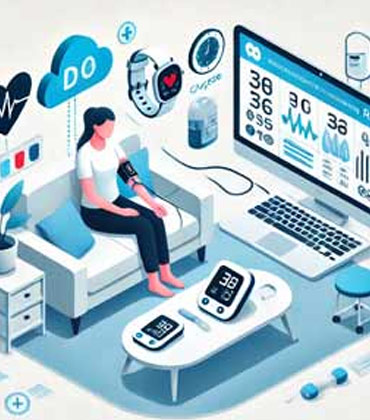
Embracing the Future: Remote Patient Monitoring
Courtney Johnson, Director of Experience Strategy; Eileen Haley, Director of Population Health; Jeffrey Pan, Senior Director, Digital Health, Population Health, and AI: Genesis R. Bojorquez, Experience Transformation Coach, UC San Diego Health
Operating Room Management
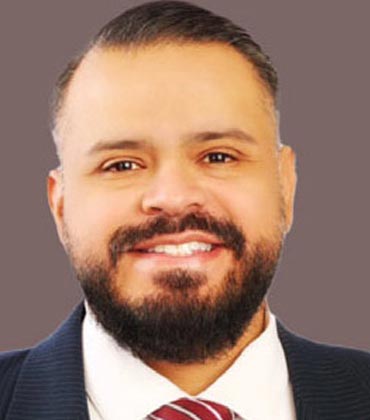
Optimizing Healthcare Procurement and Supply Chain Management
Cesar A. Roman, Director of Strategic Sourcing and Procurement Operations, University Health

IN MY OPINION
Healthcare Analytics
Deploying “Evidence Making” Solutions for Health Equity
Joseph Conte, PhD, Executive Director, Staten Island Performing Provider System

LAST WORD
Clinical Communication and Collaboration
Clinical Communication Platforms: Useful in Theory
Tara Neary, Clinical Manager Child Life and Integrative Care , Cincinnati Children's
IN FOCUS

Vendor Management Mastery: Keys to Success in Healthcare Operations
Effective vendor management in hospitals requires communication, risk management, and continuous performance evaluation to optimize operations and patient care.

Next-Generation Medicaid Management: Enhancing Efficiency and Care
Medicaid management software enhances data accuracy, reduces operational expenses, and improves care coordination.
EDITORIAL
Redefining Healthcare Value Through Operational Execution
Healthcare’s next phase will be shaped by solving the everyday operational challenges hospitals, physicians and patients deal with. This edition of Healthcare Tech Outlook explores an industry shifting from fragmented, reactive systems toward integrated infrastructure that improves visibility, reduces burden and enables continuous care.
True Access, recognized as the Hospital Vendor Management System of the Year 2026, reflects that transition. This perspective on vendor compliance comes from within the hospital and less from an addition of controls and more from a reduction in friction. By combining geofencing with mobile and automatic check-in and check-out features, hospitals can gain increased visibility over vendor traffic without interrupting clinician workflows.
Heal At Scale, recognized as Top Health Practitioners and Wellness Training Solution 2026, is helping practitioners rethink patient acquisition in an algorithm-driven environment by replacing free-entry funnels with paid, intent-based engagement models supported by AI execution. RevSuite Solutions, recognized as Top Medicaid Management Software 2026, is bringing structure and visibility to Medicaid pending management for skilled nursing facilities, reducing administrative burden while restoring operational control.
Tali Health, recognized as Top AI-Powered Care Continuity Solution 2026, is addressing a long-standing gap in care: the time that passes between medical visits, where care plans often fall apart. Zebre, recognized as a Top Medical Imaging Platform 2026, is addressing the rising cost and complexity of DICOM storage by optimizing file-level storage to reduce data demands without compromising diagnostic integrity.
This edition also features perspectives from healthcare leaders. Cesar A. Román, Director of Strategic Sourcing and Procurement Operations at University Health, explores how predictive analytics, supplier diversification, and AI-driven procurement are strengthening healthcare supply chains. Courtney Johnson, Eileen Haley, Jeffrey Pan and Genesis R. Bojorquez of UC San Diego Health explore how remote patient monitoring is reshaping chronic care management through integrated, data-driven and more accessible care models.
The companies and leaders featured in this issue reflect where healthcare technology is creating the most durable value today through systems that work more intelligently, more consistently and closer to the realities of care delivery.
