


THANK YOU FOR SUBSCRIBING
Weekly Brief
Be first to read the latest tech news, Industry Leader's Insights, and CIO interviews of medium and large enterprises exclusively from Healthcare Tech Outlook
Healthcare Tech Outlook: Specials Magazine
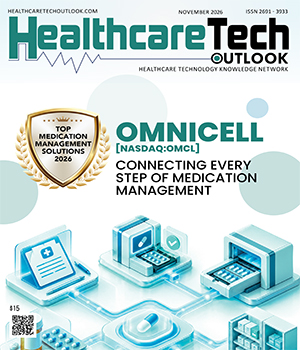
Omnicell [NASDAQ:OMCL]
Connecting Every Step of Medication Management
A medication can be available in a hospital’s central pharmacy and still be unavailable to the nurse preparing to administer it. When a dispensing cabinet runs out of stock, the nurse must request another dose, the pharmacy must locate it and someone must complete the additional delivery. The medication is in the building, but getting it to the patient has become needlessly complicated. Preventing such situations takes more than stocking cabinets. Pharmacy teams need to understand where medications are being used, anticipate replenishment requirements and coordinate inventory across different care settings. Omnicell [NASDAQ:OMCL] develops medication management technologies around these connected responsibilities. Its portfolio combines automated dispensing systems, central pharmacy robotics and inventory intelligence with expert services that help hospitals improve the processes surrounding medication distribution. The company’s approach connects the physical movement of medications with the information needed to manage them. Its newer Titan XT automated dispensing system and OmniSphere platform extend that strategy by bringing medication inventory decisions and dispensing workflows into a more coordinated environment.
Patient Engagement
Healthcare today is as much about financial survival as it is about patient care. Providers must balance shrinking margins, shifting compliance requirements, and fragmented technologies while delivering quality outcomes. These pressures have prompted organizations to reassess revenue cycle management, seeking partners who offer more than claims processing. For ACU-Serve, the answer has never been to settle for transactional billing. Instead, the company positions itself as a true extension of its clients’ teams, committed to solving immediate revenue challenges while laying the foundation for long-term growth. At the heart of ACU-Serve’s mission is a consultative approach that identifies root-cause issues, improves processes, and strengthens compliance. While some RCM partners narrowly focus on individual claims, ACU-Serve ensures the entire revenue cycle—from intake to payer engagement—is aligned for accuracy and efficiency. Amie Barone, COO of ACU-Serve, explains, “Our story isn’t just about billing; it’s about being a true extension of our clients’ teams.” This philosophy has delivered measurable results for providers of home medical equipment (HME), durable medical equipment (DME), infusion, and ambulatory infusion centers (AIC). Rather than forcing disruptive system overhauls, ACU-Serve integrates seamlessly into existing platforms, accelerating time to value. With clean claims and transparent analytics, clients often see ROI in 30–60 days. Recovery rates reach 93–95 percent, while receivables over 90 days fall below 15 percent. These results protect revenue and allow providers to scale patient care without disruption. A defining feature of ACU-Serve is its comprehensive methodology. The company doesn’t stop at resolving denials but investigates why they occur and prevents recurrences. Trained intake specialists, rigorous compliance audits, and continuous education deliver superior first-pass claim rates. ACU-Insight, its proprietary technology, equips clients with denial analytics, payer trend monitoring, and real-time dashboards. ACU-Serve optimizes the current software system clients use, such as brightree, Caretend, WeInfuse, and HDMS.
Top Patient Communication and Health Equity Solution 2026
For five days, a patient in intensive care tried to tell his care team something was wrong. A traumatic accident and intubation left him unable to speak, and English being his second language made communication even harder. When he pointed to the source of pain, the team assumed it was in his leg and gave him medication. The actual problem was a Foley catheter complication that went unrecognized and ultimately required reconstructive surgery. For patients in such vulnerable moments, access to effective care depends on their ability to make themselves understood. Vidatak built VitaTalk to close this gap and advance health equity for patients who may not be able to advocate for the support they need. The HIPAA-compliant platform gives patients who cannot speak, hear, understand the language, read, write or communicate easily, multiple ways to communicate symptoms, needs and discomfort. They can use touch, typing, drawing and visual tools to express what they are feeling. Real-time interpreter access provides audio and video language support to providers, patients and families when language becomes a barrier. VitaTalk supports over 40 languages within the application, and its interpreter service provides access to more than 250 languages. The interpreter window can be minimized so patients can continue using VitaTalk during communication with their care teams.
Healthcare AI

Improving and Innovating Quality and Patient Safety
Sharon Gilliam, MSN, RN, Senior Director of Quality & Patient Safety, Williamson Health
Patient Monitoring

Automating Medication Management for Better Outcomes
James Trumble, Vice President of Clinical Integration, Peninsula Regional Medical Center
Healthcare Analytics
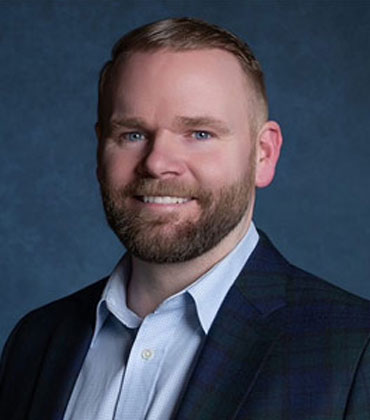
Building Trust in Healthcare Analytics at Scale
Jonathan Ferbert, Director of Data Analytics & Health Plan Operations, South Shore Health
Healthcare AI

Human-Centered Leadership in Healthcare IT
Steve Raevsky, Director of IT, SCK Health
Healthcare AI

Securing Patient Data in Hybrid Cloud Environments
Efren Olamendiz, Director of IT, Riviera Health Resort

IN MY OPINION
Healthcare AI
Mastering Minimally Invasive Surgery with Urologic Robotics
Dr. Domenico Savatta, Director of Adult Urologic Robotic Surgery, Newark Beth Israel Medical Center

LAST WORD
Medical Imaging
Advancing Aortic Arch Repair through Collaboration
Laura Walter, Chief Operations Officer, Octin Health
IN FOCUS

EDITORIAL
Advancing Patient Care through Connected Healthcare Technology
This edition of Healthcare Tech Outlook looks at how technology is changing patient communication, clinical decision-making and medication management. Innovation has to tackle operational issues while still catering to individual patient demands as healthcare systems seek safer processes and fair treatment.
Our cover story features Omnicell [NASDAQ: OMCL], which has been named the Top Medication Management Solutions 2026. The company's range links automated dispensing cabinets, central pharmacy robotics, sterile compounding technologies and inventory intelligence in order to enable healthcare providers to manage medications more effectively. Omnicell assists hospitals in improving the availability of medications, enhancing dispensing controls and cutting down on avoidable disruptions to their workflow. The development of its Titan XT and OmniSphere technologies also shows the trend towards connected medication management, since inventory insights can be used to guide replenishment and help ensure more consistent processes in various care settings.
This issue also highlights Vidatak, honored as Top Patient Communication and Health Equity Solution 2026. Its VitaTalk platform helps patients overcome communication barriers arising from speech, language, hearing, literacy or physical limitations. Touch-based interfaces, visual tools and interpreter access enable clearer interactions between patients, families and healthcare professionals, supporting more inclusive care.
CXOs provide insightful opinions on patient safety and clinical innovation. Emphasizing surgical experience, educated consent, and the promise of supervised artificial intelligence-assisted automation, James Trumble, Vice President of Clinical Integration and Peninsula Regional Medical Center, explores developments in robotic urology. His observations highlight the need of striking a balance between patient-centered care and technical accuracy.
Sharon Gilliam, MSN, RN, Senior Director of Quality & Patient Safety at Williamson Health, discusses integrating digital health, artificial intelligence and telemedicine into established quality assurance frameworks. She emphasizes transparent data practices, patient participation and collaboration between clinical and technology teams.
Together, these leaders demonstrate how connected medication systems, accessible communication and responsible clinical innovation can strengthen healthcare delivery, improve patient safety and create more responsive care environments.
