


THANK YOU FOR SUBSCRIBING
Weekly Brief
Be first to read the latest tech news, Industry Leader's Insights, and CIO interviews of medium and large enterprises exclusively from Healthcare Tech Outlook

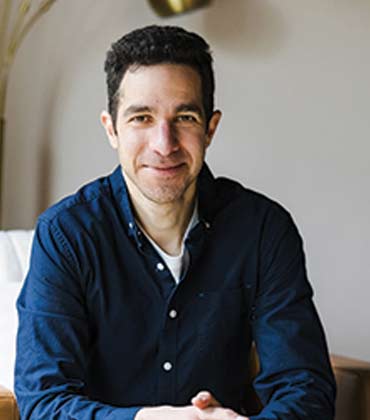 Erez Druk, Founder, Freed
He met his wife, Dr. Gabriela Meckler, just before medical school. Over the next decade, he watched her move through training, COVID-19, residency and into family medicine. He saw the commitment clinicians brought to patients and how documentation and administrative work consumed the time and energy surrounding that care. Three years ago, after closing his first startup, UrbanLeap, watching Meckler and other clinicians struggle with administrative work gave Druk a problem he understood personally and wanted to solve.
That idea became Freed, an AI clinical scribe and workflow platform designed to take administrative work off clinicians’ plates. During patient encounters, it captures conversations, converts speech to text and generates notes clinicians can review and edit. The platform has expanded to clinical evidence, coding support, pre-charting and patient communication and continues evolving to address more of the work that keeps clinicians inside the EHR instead of focused on care.
“Freed is truly a labor of love,” says Druk. “When you truly understand your users, you can build something much more empathetic and useful that really fits their needs.”
Accuracy Is Built in the Details
Creating a useful clinical note involves more than generating text. Before a visit, Freed summarizes the patient’s background and can answer the patient’s questions via AI Chat. It then records the encounter across devices and environments. Speech-to-text models tuned for medical terminology, medication names and speaker differentiation correctly attribute comments from clinician and patient, while context carries forward from note to note.
The next layer is note generation. Freed works to reduce hallucinations, account for specialty requirements and reflect individual documentation preferences.
Freed also goes beyond the scribe. AI Chat with Clinical Evidence answers clinical questions using 50+ verified sources, while Coding Assistant identifies CPT and ICD-10 codes at the highest E/M level. Clinicians retain control, reviewing the final note and editing it themselves or with AI. Support tickets feed product development, helping Freed solve immediate issues while preventing recurrence. Privacy follows the same discipline. Druk says HIPAA compliance was one area where Freed rejected the usual startup instinct to move fast, treating security and compliance as foundational from the beginning.
Freed reduces that burden without introducing another complex system to manage. Specialty-specific templates provide a strong starting point, while the platform adapts with use. When providers edit a note, change the format or give feedback, the system learns those preferences and moves future outputs closer to how they document care.
Making AI Fit the Practice
Freed starts from a simple premise. Clinicians should not have to adapt themselves to software.
This is especially important in independent practices, where fewer people and resources are available to absorb growing administrative demands. Documentation and other operational work can compound burnout, contribute to earlier exits from medicine, and, in some cases, force clinics to close.
-
Freed is truly a labor of love. When you truly understand your users, you can build something much more empathetic and useful that really fits their needs.
Freed reduces that burden without introducing another complex system to manage. Specialty-specific templates provide a strong starting point, while the platform adapts with use. When providers edit a note, change the format or give feedback, the system learns those preferences and moves future outputs closer to how they document care.
From Scribe to Connected Assistant
Druk sees clinical documentation as the starting point rather than the endpoint.
Today, AI tools often operate like separate assistants; one helps write a note, another supports coding, while another handles scheduling or patient communication. Each may improve an individual task, but the context does not always travel between them.
Freed’s longer-term vision is to connect those functions into one workflow. Scheduling information could inform visit preparation, while encounter context could flow into documentation and coding. Follow-up could continue from the same patient history without staff repeatedly moving information between systems.
Administrative work would increasingly run in the background, bringing clinicians and staff in when judgment or a decision is required.
For Druk, the goal remains to remove the work surrounding care so clinicians can devote more of themselves to what only they can do, earning Freed Healthcare Tech Outlook’s Top AI Clinical Scribe Platform 2026 recognition.
Reducing Documentation Drag in Clinical Practice
Charting time is easy to measure. The cost of divided attention during visits and work carried into the evening is harder to price, yet it is often what pushes practices toward AI scribes. Smaller practices feel that pressure acutely because administrative work competes with limited staff capacity. An AI clinical scribe has to reduce documentation effort without creating a second burden through heavy review or complicated setup.
Accuracy deserves scrutiny beyond a simple claim that a note can be generated from a conversation. The process starts before note creation, with reliable capture across devices and care settings. Speech recognition must distinguish speakers correctly and handle medical terminology consistently. Specialty language also changes what good transcription looks like, especially when medication names or similar-sounding terms enter the conversation. Note generation then has to avoid unsupported content while producing a structure that fits the clinician’s style. Buyers should favor systems that improve through real use because static note quality becomes limiting when documentation habits vary across specialties and practice models.
Clinician control is the other side of accuracy. A scribe should assist rather than make clinical determinations on the clinician’s behalf. Editing needs to be fast enough that correcting the draft is easier than writing the note from scratch. Those corrections should also teach the system how the user prefers to document future visits. Personalization built through normal use can reduce dependence on lengthy setup or extensive template work before the first appointment.
Implementation exposes weak products faster than a feature checklist. Independent practices rarely have the staffing depth for long training cycles or repeated configuration work. Adoption is easier when clinicians can begin using the tool immediately and refine it through ordinary edits. Support matters for the same reason. Issues that appear in daily use can reveal recording failures or transcription gaps that controlled demonstrations miss. A product team that converts recurring problems into broader fixes can improve reliability without asking every clinician to become a software troubleshooter. Procurement teams should ask how much clinician retraining is required when templates change because hidden adjustment costs often appear after rollout rather than during evaluation.
Disconnected visit tools can erase part of the time saved by faster note creation. Notes sit close to pre-visit preparation and coding, so moving between separate applications can add new handoffs after documentation gets easier. A broader scope is useful only when the core scribe remains dependable and easy to fit into existing routines. Decision makers should also distinguish useful extension from scope creep. Extra functions matter when they reduce work around the same clinical visit, not when they simply enlarge the software footprint. Depth in note creation should remain the deciding test before adjacent functions influence the purchase.
Freed is a premier choice for practices that want an AI clinical scribe built around clinician control and gradual personalization. Its approach combines medical speech recognition with note generation that can adapt to user edits, while specialty defaults and upfront customization can improve the starting point. Freed also supports related tasks such as coding and pre-charting, but its strongest fit remains the documentation burden that consumes clinician time. Freed gives clinicians control over the final note while learning from edits over time, allowing the documentation to move closer to each user’s preferences.
...Read more
Company
Freed
Management
Erez Druk, Founder, Freed
Description
Freed is an AI healthcare platform designed for clinicians and independent practices, combining clinical scribing, documentation, coding, clinical decision support, pre-charting, scheduling, patient communication, and Front Desk automation.

