THANK YOU FOR SUBSCRIBING
Weekly Brief
Be first to read the latest tech news, Industry Leader's Insights, and CIO interviews of medium and large enterprises exclusively from Healthcare Tech Outlook


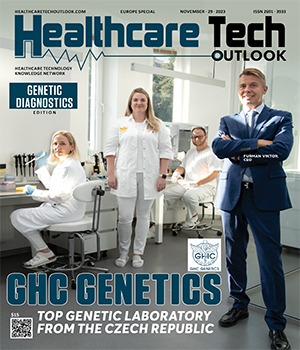
 Furman Viktor, CEO, GHC Genetics
What led you to start a company specialising in genetics?
I have been interested in health care, especially in the latest methods of treatment and prevention, since childhood, but the main impetus for the foundation of GHC GENETICS came in the form of a project submitted in the field of predictive genetic testing from Prof. William Didden, the president of NCTV (National Capital Trust of Washington), which is, among other things, the majority owner of entities associated in the group. I must say that I was literally fascinated by the submitted project and the information I received further confirmed to me the fact that genetics must become an integral and even essential part of routine health care in the near future. I saw how incredibly dynamic the field of molecular genetics is and which possibilities it already has to offer in the field of preventive and diagnostic health care – and this is all still in its infancy, because the expected development of genetics will undoubtedly affect the health of humanity across the entire planet.
Could you describe the beginnings of testing in genetics?
We were one of the first private companies to enter a world where clinical genetics was the domain of university departments. That is why we did not have an easy start and it took us some time to earn our place. The fact that today we are one of the top companies in our field, and not only in the Czech Republic, is proof that the path we chose was the right one. We are a respected specialist centre in the field of molecular genetics and I am very proud of the fact that our company is approached by a lot of important university departments and non-state medical institutions with requests for various, often very complex genetic testing.

What are some of the main factors which set GHC Genetics apart from the competition?
GHC Genetics was one of the first laboratories in the Czech Republic to perform complex genetic analyses, not only from a diagnostic point of view, but also in the context of preventive genetics, a field which we place a great emphasis on. The aim of the genetic laboratory is primarily the diagnosis of hereditary diseases and disorders, this being performed on the basis of knowledge of gene mutations and rearrangements, where a particular disease can be associated with a particular variant of a known gene. From the point of view of preventive genetics, the so-called lifestyle diseases which affect a large part of our population are important – be this cancer, cardiovascular disease, diabetes or obesity. By detecting these mutations in the genes involved in these diseases at an early stage, it is then possible to determine measures to ensure that the disease either does not develop at all, or that it is detected early, thereby greatly increasing the likelihood of successful treatment. The heart of our company is undoubtedly our very own state-of-the-art genetic laboratory where our perfectly coordinated, highly professional team works under the guidance of leading experts who perform all of the molecular genetic analyses with the utmost care. This means that we can ensure the comprehensive supervision of the testing itself, something which constitutes a significant difference in comparison with many other companies which send samples to other, often non-accredited, laboratories (frequently located abroad) and cannot therefore directly guarantee the validity of the results or the certified methods used themselves, etc. Another integral part is of course the outpatient part, consisting of a top team of certified doctors – clinical geneticists and a wide network of around 2,000 collaborating doctors and medical institutions from all over the Czech Republic, by which we help to care for their patients. But we also have our own science and research department that analyses and implements new scientific findings in practice, making us very often the first centre capable of performing the latest genetic tests. Clinical genetics is a very progressive field and in order to maintain our status as a top accredited facility in the future, our range of tests must very quickly respond to the latest findings from worldwide research in the field of genetic testing and it is therefore essential that we continually expand and refine our testing as much as possible. Today, we offer more than eighty types of analyses, often very complex, essentially covering the entire spectrum of genetic tests which can be performed, and this number is constantly expanding.

Could you give us an idea about the genetic tests and services offered in the GHC Genetics laboratory and how you ensure the accuracy and reliability of the results of genetic analysis which are provided to your customers?
Let me start with the second point. As far as the accuracy of results is concerned, this can be divided into three parts: certification, our professional team and our equipment. Our laboratory meets the requirements of a number of very strict certifications which are regularly checked by the Czech Accreditation Institute (CAI). All certifications can be found on our website www.ghcgenetics.cz. In order for us to be awarded certification, we had to meet dozens of very strict conditions. In the laboratory, compliance with these procedures is closely supervised by a quality manager. Of course, we have a team of top-tier laboratory technicians who are continuously trained in new procedures and the operation of new equipment, etc. Without the right equipment, this would not of course be possible and so the constant renewal and modernisation of the instruments we use is an integral part of our operations.
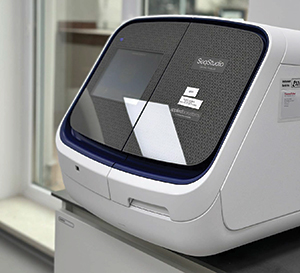
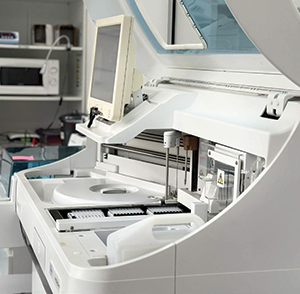
The technical equipment in our laboratory is therefore on the cutting edge of the latest global trends. Within the framework of the equipment we use, we own high-end technologies which guarantee the maximum accuracy and validity of the results. The results do of course undergo multiple checks.
As far as tests are concerned, I would pick the three mentioned below. By examination of human DNA, it is now possible to detect a wide range of hereditary predispositions and then, on the basis of genetic analysis, to set precisely targeted preventive measures, or possibly medication and targeted intervention, etc. The test, which focuses on prevention and is the “flagship” of our laboratory, is called GenScan. This test analyses more than 90 phenotypes/diseases with more than 700 genes and gene variants. It is the broadest genetic panel on the market, testing for both the most common monogenic diseases (which are caused by the dysfunction of one of our genes) and also the previously mentioned multifactorial diseases. It also contains panels dealing with detoxification of environmental pollutants, addictive substances and drugs, reproductive genetics, oncogenetics, i.e. predisposition to certain hereditary tumours, and last but not least various food intolerances.
Another unique test performed in the GHC Genetics laboratory is undoubtedly the clinical exome analysis, which is performed especially in patients who are characterised by a specific set of symptoms indicative of a particular defect, fault, disorder, disease or illness. Clinical exome sequencing (CES) analyses approximately 4,500 genes which are associated with individual diseases. A special bioinformatics program is used for the evaluation, which performs, among other things, an evaluation of the so-called TRIO analysis (i.e. mother/father/proband comparison). This tool is in high demand for finding mutations in cases with severe clinical indications. With the aid of this analysis, it has been possible to identify such diagnoses as Liang Wang syndrome, metaphyseal dysplasia, renal tubular dysgenesis, Johanson Blizzard syndrome, Coffin Sirin syndrome and other rare genetic diseases.

In response to numerous requests from many university centres and doctors, we have recently introduced whole exome sequencing (WES) in which over 19,000 genes are examined!
How does the GHC Genetics laboratory ensure the efficient and timely delivery of genetic analysis reports to customers? What is the typical time it takes for customers to receive their results?
Each test has a set delivery time for the results. Some are more demanding to evaluate, for example GenScan, where people receive the result in approximately 3 to 6 months. This is due not only to the high demands placed on the laboratory for the performance of this genetic analysis, but also the fact that the clinical geneticist must subsequently evaluate the results and, on the basis of these results, draw up a very detailed report, which is then presented to the patient in person and together with them, the geneticist then determines the necessary preventive measures or the correct medication.
It is of course crucial that the results reach the doctors who send us biological samples of their patients for a variety of genetic or microbiological laboratory tests in good time. For this purpose, we have set up a software program for the online sharing of results between us and doctors, where they can clearly see the individual examinations.
We have invested a great deal of money to ensure that this program is technically secure and that the risk of any leakage of sensitive data and information is eliminated as far as possible. We are world leaders in this respect too, and we handle data with great care and caution to avoid any misuse.
How crucial are the genetic counselling services which GHC Genetics offers to customers, who then use the results to help make decisions about their further course of action?
Genetic tests are often absolutely crucial for the decision on any further course of treatment. This is particularly crucial in the case of cancer, where confirmation of a gene mutation can reveal the development of breast or ovarian cancer. The person in question is then monitored much more closely, or the patient, in consultation with her doctor, may opt for a total mastectomy. It is important to note that in the case of a positive mutation in the so called BRCA 1 and BRCA 2 genes, the probability of occurrence is up to 80%, which is a really significant statistical value. A genetic cause of breast and ovarian cancer is found in about 5-10% of cases. Since approximately 7,200 people in the Czech Republic receive this diagnosis each year, the cause may be genetic in up to about 700 people. Another example of a test with a very specific impact is the Reproscreen test which aims to screen couples before starting a family for rare and often very serious genetic diseases such as cystic fibrosis and spinal muscular atrophy. Although finding this out can be very difficult for them, it would be even more challenging to subsequently care for a child who is only certain to live to a certain age, etc. But for many of these diseases, people can in fact also be helped. In the case of recessive inheritance, the disease is caused by two mutations of the gene in question, one from the father and one from the mother.
In this case, both parents are healthy carriers and the risk of disease for each of the children they have together is 25%, with 50% of their offspring being carriers and 25% of the offspring with no mutation observed. In the case of severe recessive diseases, the children can be prevented from being affected by selecting a healthy embryo as part of preimplantation genetic diagnostics in assisted reproduction centres.
Could you please mention one or two case studies showing how your solutions have impacted your clients?
For example, a patient is suffering from various digestive problems, is losing weight and in the case of a child, is not developing properly. The doctor tries to find a solution, unsuccessfully trying various restrictive diets, on top of which difficulties relating to the deficiency of certain micronutrients can then accumulate. This further complicates the overall clinical picture. Let us consider, for example, a patient who reports a worsening of difficulties associated with the consumption of milk or dairy products. The essence of the problem may be a lactase enzyme deficiency
(lactose intolerance), but it could also be a milk protein allergy or histamine intolerance. In each of these cases, a different approach is taken to the diet or treatment and genetic tests rule out or confirm some of the diagnoses. In this way they help to establish the patient’s final diagnosis and determination of an effective diet and treatment. Testing also has great added value because based on the results, specific follow-up tests are then recommended for family members (children) to confirm/rule out inheritance of specific mutations.
In what area of clinical genetics do you see the greatest progress now?
A new development in the field of genetic testing is pharmacogenetics. With our PharmaGen test, it is possible to determine how an individual will respond to certain drugs based on heredity factors or the genetically determined activity of the enzymes which metabolise the drugs. A pharmacogenetic analysis helps to determine the efficacy of specific drugs, to identify which drugs are suitable for the patient and which are less so, helps set the correct dosage, reduces the risk of adverse events for specific types of drugs, identifies patients susceptible to drug-drug interactions and helps reduce their occurrence, reduces the time needed to select the appropriate drugs and increase patient compliance with treatment. It is of the greatest importance especially in the fields of psychiatry, neurology and internal medicine. Although this does not concern genetic testing, we have also begun to research the microbiome which has a significant impact on our health and we believe that in time we will be able to offer this examination in such a level of quality that we will be able to improve people’s health and incorporate it into our offer of comprehensive preventive examinations. Gradually, we also want to focus on genetic predispositions which are associated with autism spectrum disorders, where the groups of genes which are involved in the development of autism spectrum disorders are becoming more and more precise. Our experts recently reported on two case studies in this con- text at the largest genetics conference in Glasgow.

In 2022, GHC Genetics also began offering microbiological testing for a range of infectious diseases, including sexually transmitted ones. For example, pregnant women can now benefit from TORCH testing, an acronym which stands for a group of infectious diseases which can cause serious birth defects in newborn babies. The risk posed by these diseases is that their infection can often be asymptomatic and in the first trimester is a great threat to pregnant women. The TORCH panel includes testing for toxoplasmosis, rubella, cytomegalovirus (CMV) and the herpes simplex virus (HSV1 and HSV2).
Have you ever undergone any predictive genetic testing yourself?
Yes, I have undergone a number of genetic analyses. One of these is the previously mentioned GenScan genetic analysis. This is the most comprehensive analysis of its kind in the world. The genetic results that were ascertained significantly help me to keep myself in the best possible shape and, together with continuous checks on my biochemical results, I adjust my preventive health care based on them.
What guides you in your professional life?
I believe that the key to success in any job is to love what you do. To immerse yourself in it, so to speak, and to believe that what you are doing has a deeper meaning and benefit not only for you, but especially for other people. Over the years that I have been involved in genetics, I have also accepted the fact that I myself am not the best at everything and that I cannot understand everything in depth. Therefore, the basis of my success is also the fact that I surround myself with colleagues who can focus on a very narrow area of work, so they are much greater professionals than I am in their given field. When you put people like that together into a single functioning unit, you can expect the team to be a success, and I am proud that I have achieved just that. But you must not rest on your laurels when you achieve a result like this and that is why I know in my heart that even though I am following this career path successfully, I am definitely not finished yet and there is still much to change and improve and that is precisely what I am looking forward to.
Company
GHC Genetics
Management
Furman Viktor, CEO, GHC Genetics
Description
GHC Genetics is a leading company specializing in genetics that provides comprehensive genetic testing and counselling services. Having a focus on preventative genetics, the firm uses cutting-edge technology and knowledge to deliver reliable results that help individuals make informed decisions about their health.