THANK YOU FOR SUBSCRIBING
Weekly Brief
Be first to read the latest tech news, Industry Leader's Insights, and CIO interviews of medium and large enterprises exclusively from Healthcare Tech Outlook


 Andrew Simpson, Chairman & CEO, HeartSciences
Today the ECG has significant limitations for detecting most forms of heart disease and so is not recommended for screening. But despite its significant limitations, in the absence of an alternative, millions of ECGs are performed every week throughout healthcare. However, it is now indisputable that applying artificial intelligence to the ECG will allow it to detect a much wider range of heart disease. The new field of AI ECG offers the meaningful prospect of solving the significant diagnostic gap in heart disease of early detection before an event, such as a heart attack. says Andrew Simpson, chairman and CEO of HeartSciences. We have invested years of research into our first AI ECG product, the MyoVista, which would be low-cost and simple to perform in any healthcare setting. Our objective is to become a fixture in frontline healthcare to help physicians make better and earlier referral decisions for at risk patients."
In addition to the conventional ECG time-voltage traces, HeartSciences’ MyoVista® Wavelet ECG (wavECG™) Cardiac Testing Device uses an advanced form of signal processing called continuous wavelet transform (CWT) to extract valuable time-frequency information from the ECG signal to which AI is then applied.
AI ECG enables new diagnostic algorithms to be built to detect conditions that were only previously possible using cardiac imaging in cardiology, such as structural and ischemic (coronary artery) heart diseases. Often these cardiac issues are not identified using a standard ECG because they do not generally interrupt the heart's rhythm until an acute stage of heart disease or following a heart attack when it’s too late.
Committed toward an accurate and overall heart disease risk assessment, HeartSciences’ next-gen ECG MyoVista uses AI to detect changes in the heart’s diastolic function caused by almost all types of heart disease which, upon regulatory clearance, could significantly improve frontline screening and reduce healthcare costs.
As a testament to its IP portfolio, HeartSciences has been granted nine patents in the U.S., such as the ECG quantification of echocardiographic measures of the heart’s diastolic function using AI methods. It has also been awarded 31 patents in various jurisdictions outside the U.S., including the design of the electrode and cable connectors for use with an ECG.
For the future, HeartSciences looks forward to establishing itself as the leader in the emerging field of AI ECG and developing more algorithms for newer clinical indications and uses. "We will look to partner with organizations and incorporate their algorithms on our device. In the future we are also keen to expanding the MyoVista platform for home use and in telemedicine point-of-care environments,” says Simpson.
To accelerate its product development pipeline and further expand the clinical value of an ECG for low-cost detection of heart disease, HeartSciences recently entered into a collaboration with the New Jersey-based Rutgers University for the development of further AI ECG algorithms. These collaboration efforts will be focused on leveraging the extensive clinical data compiled at Rutgers.
HeartSciences has also participated in multiple clinical studies across North America. A recent study published in the Journal of American Cardiology found that an algorithm using the MyoVista technology outperformed current referral methods and concluded that it may reduce unnecessary echocardiograms in higher risk patients methods by almost 50 percent. Similarly, another publication evaluated MyoVista’s ability to detect calcium levels in coronary arteries. The article noted that AI-based algorithms using patient ECG data, along with additional clinical variables focused on predicting Coronary Artery Calcium (CAC) scores, can go beyond the current referral procedures in identifying patients at risk of suspected coronary artery disease.
A further publication using HeartSciences’ technology demonstrated theability to develop a practical algorithm for the MyoVista to identify patients at risk of a major adverse cardiac event within the next three years.

We have invested years of R&D focused on advancing the field of artificial intelligence in electrocardiography to develop new AI ECG algorithms focused on detecting cardiac conditions not previously available using an ECG

For the future, HeartSciences looks forward to establishing itself as the leader in the emerging field of AI ECG and developing more algorithms for newer clinical indications and uses. "We will look to partner with organizations and incorporate their algorithms on our device. In the future we are also keen to expanding the MyoVista platform for home use and in telemedicine point-of-care environments,” says Simpson.
Company
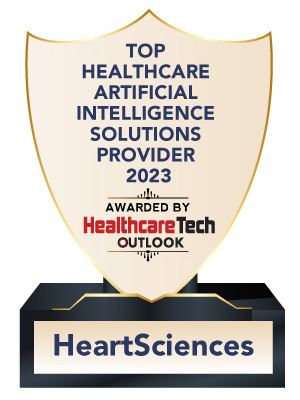
HeartSciences
Management
Andrew Simpson, Chairman & CEO, HeartSciences
Description
Established in 2008, HeartSciences seeks to bridge today’s “diagnostic gap” in cardiac care by providing effective front-line solutions that assist in the detection of heart disease in at-risk patients.