


THANK YOU FOR SUBSCRIBING
Weekly Brief
Be first to read the latest tech news, Industry Leader's Insights, and CIO interviews of medium and large enterprises exclusively from Healthcare Tech Outlook


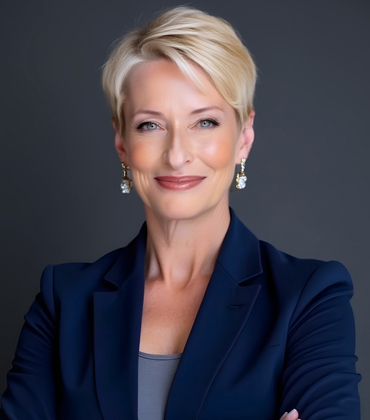 Kirsten Brecht Baker, CEO & Co-Founder, Jeenie
Unable to identify her language, the care team turns to Jeenie, a platform that connects clinicians directly with medically qualified human interpreters. Using language-identification techniques, Jeenie determines that she speaks Q’eqchi’, an Indigenous Mayan language. A physician places a phone on her chest as the team pushes the gurney toward the operating room. Within seconds, an interpreter is online, speaking to the patient.
The patient is pregnant but didn’t know it. Hours of difficult labor follow. Jeenie brings in a second interpreter to provide relief, but the first also stays on the call throughout the delivery. The baby is born safely, and the mother is stable.
“Communication doesn’t just support care. It can determine outcomes. It shapes lives,” says Kirsten Brecht Baker, CEO & Co-Founder.
Because Every Second Counts
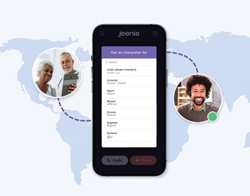
Jeenie’s Direct-to-Interpreter platform connects clinicians with medical interpreters across hundreds of spoken and signed languages in an average of eight seconds, without compromising quality. Jeenie’s revolutionary, tech-forward, human-centered approach to addressing multicultural communication barriers in healthcare has now earned it Healthcare Tech Outlook’s Top On-Demand Medical Interpretation Platform of 2026. Baker is proud of the numbers, but she insists they don’t define Jeenie. The client experience and patient outcomes do.
“We always tell clients, don’t be impressed that we answer calls across all languages in eight seconds, because what matters most is the quality behind the conversation. When I tell you our quality rating from clients has never dropped below 4.9 stars, now you can be impressed!” Baker chuckles.
Speed makes communication accessible. Quality makes it trustworthy. Delivering both consistently across hundreds of languages and thousands of critical conversations is what sets Jeenie apart.
An Industry Ripe for Disruption
Earning that trust meant rethinking an industry that had undergone almost no innovation in decades and remained built around archaic models, outdated equipment, operators, and call centers. Baker reminds us that not long ago, physicians and patients still had to leave the exam room to use separate hallway phones for choppy, audio-only calls with invisible interpreters. Video improved matters, but it was largely limited to tablets mounted on carts, with access confined to the four walls of the healthcare organization.
 Most Language Service Providers (LSPs) had not kept up with the times. They lacked the flexibility and mobility clinicians needed amid the increasing decentralization of care. They also lacked the diversity and response times required to address changes in the country’s language demographics. Furthermore, they lacked a way to balance service quality and respect for linguists with clients’ demands for lower prices.
To adapt to the changing market, established LSPs opted to protect their margins by cutting interpreter pay rather than reducing their dependence on costly infrastructure.
Baker laments that the result has been lower pay for interpreters, who are caught in the crossfire of client price wars, and lower-quality healthcare. “Our job is to support equity on the patient and the provider side of the marketplace. A Spanish interpreter working in a call center can’t live on the five dollars an hour being paid by some of our competitors. At those rates, it should be no surprise that the quality is far less likely to be medical-grade,” she states. She goes on to say, “Clients must also take responsibility for holding the quality line. They have to embrace the balance between quality and pricing.”
Baker and co-founder Dr. Richard Brecht took inspiration from real-time, flexible workforce platforms like Lyft and DoorDash. Jeenie’s Direct-to-Interpreter model matches clinicians directly with qualified linguists working around the world and around the clock, reducing overhead so the company can pay, attract, and retain the industry’s best interpreters.
“We don’t see our linguists as replaceable commodities,” Baker says. “They are truly the heart and soul of our business.”
The Real Test: Every Single Call
That commitment to interpreters is central to Jeenie’s approach to quality. Its matching technology can connect people in seconds, but delivering consistent excellence depends on the expertise of the linguist answering the call.
 “Speed is really the outcome, not the innovation,” Baker says, referring to Jeenie’s above-average response time. “The real innovation is creating a platform that can deliver reliable, consistent language access at scale.”
That reliability requires more than fast matching and intelligent routing. Before taking calls, interpreters undergo language-proficiency, cultural-competency, and subject-matter testing, along with background checks. Ongoing coaching and client ratings reinforce those standards. An interpreter whose rating falls below the Jeenie’s four-star threshold is removed from service while the quality team evaluates whether additional training can close the gap.
Consistency builds confidence and, importantly, drives adoption. Medical conversations demand more than literal, word-for-word translation: interpreters must understand clinical terminology, recognize cultural context, and help ensure that the meaning of a patient’s words is accurately conveyed.
“Clinicians come to believe in us. They trust that every time they use Jeenie, they’re going to have a good experience. They know an excellent interpreter will arrive quickly,” Baker says.
More Languages. More Inclusion.
Consistency is easiest to deliver in widely spoken languages like Spanish. The harder test is providing equally dependable access to less common languages that most LSPs struggle to cover. Jeenie anticipated growing demand for rare and Indigenous languages years ago, well before current migration patterns brought speakers of those languages to hospital doorsteps.
“We wanted to take a stand that serving ‘all’ patients meant resourcing those languages just as effectively as common languages,” Baker says. “Even if the majority of your business is done in Spanish, that doesn’t mean that speakers of other languages should have to live with slower responses or lower quality. Their needs, and those of the interpreters serving them, should not be treated as an outsourced afterthought.”
-
The question isn’t whether AI will transform communication. It’s whether that transformation will reach the people and languages today’s technology has overlooked. We want to bring our linguists’ expertise into that development so the next generation of AI can truly serve the world.
Jeenie recruits rare-language interpreters directly into a marketplace of roughly 40,000 linguists, working with regional and country ambassadors embedded in those communities. A request for Rohingya, K’iche’, or Wolof can be answered as quickly as one for Spanish, with Jeenie knowing who is providing the service rather than relying on unknown subcontractors.
The company also tracks census research and global events. Its migration and refugee-support clients often encounter emerging language needs months before local healthcare providers do. This early insight allows Jeenie to identify communities and recruit interpreters before demand reaches an emergency department, where the seconds it takes to connect may make the difference between life and death.
“Our clients expect us to consistently anticipate future trends and needs…before a patient with an unfamiliar language is standing in front of a clinician,” Baker says.
Built Into How Clinicians Already Work
However, coverage and speed address only two of the three challenges to seamless access to language services. Workflow integration is the third. Clinicians need to communicate across languages without interrupting care. “Friction is the enemy of adoption,” Baker says.
Jeenie works across smartphones, shared workstations, and landlines, making it compatible with different operating systems. Its Bring-Your-Own-Link feature adds interpreters to existing Teams, Webex, Zoom, or telehealth conversations rather than forcing teams to change platforms. The same approach extends to its integration with electronic health record systems, such as Epic.
Reducing implementation hurdles is part of addressing the workflow challenge. Jeenie’s lightweight, intuitive platform allows even large health systems to go live within days to a few weeks. A chief systems officer at a large healthcare system in Colorado offered this feedback on the organization’s Jeenie launch: “In my role, no news is good news. No support tickets, no complaints, just adoption. That tells me a lot.” It’s a sentiment Baker has heard often.
The Cost of Not Understanding
For language barriers to truly disappear in healthcare, language access needs to be “ubiquitous” and integrated into everyday workflows rather than treated as an obstacle. For that to happen, the industry needs to change its mindset. Health systems typically view interpreting as an added expense. Baker asks them to take a different perspective: instead of asking, “What does interpreting cost?” the question when evaluating ROI should be, “What’s the cost of not being able to communicate with a patient?”
 One hospital study found that 30-day readmissions among patients with Limited English Proficiency (LEP) fell by 25 percent when professional interpreting was in place. Patients admitted and discharged without an interpreter may stay up to 1.5 days longer. Some clients reported that using Jeenie reduced appointments with LEP patients by 30% to 60%, as clearer communication helps patients provide fuller accounts of their symptoms and concerns, including issues such as food or housing insecurity. Such details, including social determinants of health, can reveal needs that might otherwise have gone undetected and lead to changes in an entire care plan.
The stakes are especially clear at discharge. A physician told Baker about a 66-year-old Spanish-speaking patient who was instructed after surgery to avoid solid food until her follow-up appointment. Without qualified interpreting, she understood the directive to mean that she could eat whenever she felt ready. Seven days later, she returned and required another operation, resulting in an extended hospital stay.
Baker also points to research indicating that children whose parents have limited English proficiency face twice the risk of medical harm. It’s a jaw-dropping disparity, but thankfully regulators are catching up and increasingly recognizing language access as a patient-safety and civilrights concern. “Language support isn’t a nice-to-have. It’s essential,” she says, “and healthcare institutions will need to follow suit.”
AI Raises the Stakes
As healthcare organizations explore AI-powered interpreting, those concerns become even more pressing. The technology offers enormous potential for improving communication while reducing costs, but accuracy still varies dramatically across languages and depending on the direction of the conversation. English-to-Mandarin translation can perform well in a quiet room, while Mandarin-to-English translation can be significantly less reliable. Rarer language combinations may not even be supported. Under Jeenie’s stringent accuracy testing, fewer than two dozen languages meet its accuracy threshold for speech-to-speech interpreting in lower-risk healthcare settings.
Stringent testing is important, but it’s only part of the picture. Healthcare doesn’t happen in a lab. Emergency departments have overlapping voices, unfamiliar accents, background noise, and frightened patients speaking in fragments. A fluent-sounding translation can still be dangerously wrong. Consequently, while healthcare providers are certainly interested in AI, they remain cautious, comparing the risk to “the driverless car that runs the stop sign.” In healthcare, an AI error can cause real harm.
At the Speed of Trust
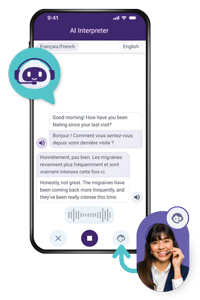
Finding a way to leverage technology while retaining their gold-standard human interpreters, Jeenie has developed a hybrid AI + Human model that gives clinicians and health systems control over when and how they use AI. Developed in partnership with health systems, Carnegie Mellon PhDs, AI researchers, and interpreting experts, Jeenie’s hybrid interpreter model is being piloted at Mass General Brigham and other care locations. Clinicians can start with AI and escalate to a qualified human interpreter at any moment.
Organizations can adopt the technology at a pace consistent with their standards for safety and quality. Some are eager to begin, while others want to test the waters. A hybrid model offers a safer way to do so.
“Our job will basically be to give them the quality, transparency, and control to adopt and rely on AI at their own pace, at the speed of trust,” Baker says.
Human linguists also remain an integral part of the equation. “We see AI as a way to elevate the reach and efficiency of Jeenie interpreters,” Baker says. There simply aren’t enough qualified interpreters worldwide to handle every conversation that requires one. AI can step in to support low-risk, routine interactions, while human interpreters can focus on complex and sensitive situations.
Where Interpretation Goes Next: Access to All Languages
Jeenie’s hybrid model helps manage AI’s limitations today, but Baker also wants to help overcome them. As populations move across borders and communities, she believes language access must evolve beyond today’s largely English-centric model. Increasingly, people need to communicate directly across languages, whether from Tamil to Punjabi or Sylheti to Wolof. The goal is what Baker calls the “universalization of communication,” where anyone can connect with anyone, regardless of language.
She puts the challenge this way:
 “The question isn’t whether AI will transform communication. It’s whether that transformation will reach the people and languages today’s technology has overlooked. We want to bring our linguists’ expertise into that development so the next generation of AI can truly serve the world.”
Achieving that vision takes more than an interpreting network. For many less-resourced languages, high-quality multilingual and multicultural data remains scarce, making AI models harder to train and evaluate. Jeenie’s parent company, Jeenius, is partnering with frontier AI labs and developers of communication tools to help ensure emerging technologies are more comprehensive, equitable, and far-reaching across languages.
Jeenius’s global marketplace of linguists brings real-time linguistic and cultural knowledge of rare and underserved languages in domain-specific areas, such as healthcare, helping to close gaps in today’s AI models.
The Measure of Progress
For Baker, the benchmark for interpreting is not simply whether the meaning gets across. It’s whether a patient who needs an interpreter has the same experience as one who doesn’t. The same trust. The same diagnosis. The same quality of care.
Jeenie’s ambition is simple to state and hard to achieve: no patient should ever have to navigate their care in a language that isn’t their own.
The company is leveraging technology to get there, not by removing the human element, but by elevating it. Every advance, from eight-second matching to AI designed to hand off to human interpreters, exists to put a qualified interpreter at the point of care, at the moment of need, and in more languages to drive healthier patient outcomes. In a California emergency room, that meant a Q’eqchi’ interpreter who stayed on the line through hours of difficult labor. Technology made the connection. Clinical accuracy made her safe. The interpreter made it human.
The humanity made her whole.
When Medical Interpretation Must Reach the Bedside Fast
Language access breaks down most visibly when care moves faster than the interpreting service. A patient may arrive without a documented language preference, a clinician may need help away from a fixed workstation or an unfamiliar language may surface without warning. Delay is only part of the risk. A fast connection to an interpreter who lacks medical fluency can leave the clinical conversation just as exposed. Executives comparing on-demand medical interpretation platforms should examine access and interpreter quality alongside deployment fit and system-wide consistency.
The quality of interpreters should be scrutinized during the recruitment process and continuously reviewed. Medical conversations involve specialized vocabulary and incomplete patient descriptions, often complicated by cultural context. That calls for language and subject knowledge checks before hiring, followed by regular performance reviews. Call ratings and removal thresholds matter because a large network only inspires confidence if the same standard holds across every language pair. Rare-language coverage should also be treated as a core service requirement rather than an outsourced exception when community demographics are changing quickly.
Access also has to follow the clinician. Care now happens across hospitals and clinics as well as home settings and telehealth environments. Interpretation tied to a dedicated cart or fixed device can create avoidable delays when staff have to locate equipment before speaking with a patient. Buyers should examine whether a platform works across personal devices and shared workstations. Video and audio options should be easy to initiate from the point of care without creating a separate workflow that staff learn to avoid.
“Jeenie’s direct-to-interpreter model connects clinicians with qualified medical interpreters across common and rare or Indigenous languages without routing calls through an operator.”
Enterprise deployment creates a different test. A platform may perform well in a single encounter yet become difficult to manage across a large health system if administrators cannot track usage and allocate costs while seeing demand patterns and site-level adoption. Integration with meeting tools and electronic health record environments can reduce handoffs, but buyers should distinguish practical integration from projects that require extensive technical work before adoption begins. Reporting controls and implementation support should be evaluated alongside clinician access because both determine whether language services become part of routine care.
“Video and audio options should be easy to initiate from the point of care without creating a separate workflow that staff learn to avoid.”
AI introduces another procurement tension. Machine interpretation may expand availability and lower cost in some settings, yet medical use still requires careful testing by language pair and real-world environment. Background noise, accents, incomplete speech and overlapping voices can expose weaknesses that do not appear in controlled tests. Healthcare organizations should therefore examine whether automated interpretation can escalate to a qualified human when the conversation becomes too complex for the system to handle reliably.
Jeenie uses a direct-to-interpreter platform that routes requests through real-time matching technology rather than a call-center operator. Its service supports audio and video interpreting from devices already used by care teams, while its interpreter network extends across more than 300 spoken and signed languages. Jeenie’s direct-to-interpreter model connects clinicians with qualified medical interpreters across common and rare or Indigenous languages without routing calls through an operator. It also supports workflow entry points such as Bring Your Own Link and administrative reporting for enterprise use. For health systems that require rapid interpreter access while maintaining quality, Jeenie merits consideration, particularly where language services must fit existing clinical workflows.
...Read more
Company
Jeenie
Management
Kirsten Brecht Baker, CEO & Co-Founder, Jeenie
Description
Jeenius combines human interpreting expertise with AI and multilingual data services to address language barriers in critical settings. Through its Jeenie platform and global network of linguists, the company aims to make communication more reliable, culturally informed, and accessible across languages.

