


THANK YOU FOR SUBSCRIBING
Weekly Brief
Be first to read the latest tech news, Industry Leader's Insights, and CIO interviews of medium and large enterprises exclusively from Healthcare Tech Outlook
A featured contribution from Leadership Perspectives: a curated forum reserved for leaders nominated by our subscribers and vetted by our Healthcare Tech Outlook Advisory Board.

Teladoc Health
The Future of Healthcare: Ambient Technology
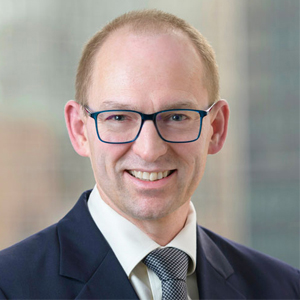
Claus T. Jensen
A mother was driving down the highway when she started to feel dizzy. Her two young children were in the backseat of the car. Recently diagnosed with diabetes, she knew she had to stop the car and check her blood glucose levels. The readings confirmed she had low blood sugar ― a potentially dangerous situation. Her cellularly connected blood glucose meter beamed the data point back to her diabetes management program’s systems and alerted a health coach. The coach called to check in on her and guided her to the closest gas station to buy food to help counteract her low blood sugar.
A retiree was at his regular virtual primary care visit when his doctor, looking at the data sent from the patient’s smartwatch, asked why he was not moving as much as he used to. The patient explained that he was experiencing back pains that prevented him from doing all the things he normally would. Together, they decided to enroll the patient into a combined physical and digital therapy program.
These are two examples of how healthcare technology can become ambient, simply part of the background environment that we live in. Other industries have used ambient technology for decades, so why not the healthcare industry? Having health and care solutions always at your fingertips is possible. The tools now exist to help blur the boundaries between people, processes, and technology to create an ambient healthcare experience that is convenient, efficient, and meaningful in context. But to make this practical at scale, it is both necessary to connect the dots differently for a more personal healthcare experience; and to build more intelligent healthcare solutions by fusing the right sciences together.
Solving the Village Doctor Paradox
The village doctor paradox is a generational problem that’s 100 years in the making. As modern healthcare evolved to become more specialized, this created a more fragmented and complicated healthcare ecosystem that’s difficult for consumers to navigate.
“The tools now exist at everyone’s fingertips to help blur the boundaries between people, processes, and technology to create an ambient healthcare experience that is convenient, efficient, and meaningful in context.”
And here’s the paradox: Consumers want access to the best care modern healthcare can provide, yet they also want the comfort and ease associated with the personalized care they received from the best village doctors of yesteryear. Because the village doctors knew everyone in the village, over a lifetime of interaction, this personalized and connected care is exactly what they delivered to the local community. Two paradigm shifts have to occur to help solve this paradox.
First, there needs to be an acknowledgment that care can happen in many places and many modes ― ranging from purely virtual to a traditional brick-and-mortar. This gives us the choice of how to get care with different associated levels of convenience; only this does not (yet) provide an intimate and cohesive care journey.
The second paradigm shift requires a change in perspective. Industry leaders must focus not just on the best care in isolation, but also on how to connect the dots effectively across the broader ecosystem and the various sophisticated towers of care solutions. The answer to the village doctor paradox does not lie in wholesale replacement of the current system, let alone a return to a single clinician health service. Instead, we must disaggregate siloed solution towers and put the pieces back together better. In other words, solving this second dimension of the village doctor paradox requires us to transform our way of thinking and create a novel native approach to whole-person care.
Building the scientific foundation for whole-person care that is native and personal
Taking a novel approach to whole-person care, creating an integrated ecosystem that delivers a native and personal care experience requires looking at healthcare problems differently. Traditionally and historically, healthcare innovation has mostly been centered on clinical science, always pursuing better treatments and standards of care. Yet for the next normal in healthcare, clinical science innovation is no longer sufficient.
To truly address the village doctor paradox, to limit or even remove the friction that often plagues the healthcare experience and prevents better health outcomes, the next normal healthcare model must fuse the following five sciences:
• Clinical science: Clinical capabilities and programs with proven efficacy.
• Behavioral science: Experiences and action triggers that drive quality care.
• Logistical science: Logistics, partnerships and support services to operate at scale and complexity.
• Technology science: Technology that is loosely coupled, composable, pre-integrated, synergistic, scalable and intelligent.
• Data science: Data science delivers the intelligence that powers a native whole-person care experience. Delivering care with integrity, quality and compassion requires situational and emotional understanding at all points of interaction.
Fusing these five sciences the right way helps create both a continuous situational awareness at a population level and an understanding of personal clinical truth at an individual level.
Finally, let’s not forget that self-care is a key component of healthcare! Forcing people to do the right things won’t work. But guiding them to the right decisions, with meaningful, insights-driven nudges, will help entice individuals to make the choices that positively impact their health and wellbeing
The articles from these contributors are based on their personal expertise and viewpoints, and do not necessarily reflect the opinions of their employers or affiliated organizations.
