THANK YOU FOR SUBSCRIBING
Weekly Brief
Be first to read the latest tech news, Industry Leader's Insights, and CIO interviews of medium and large enterprises exclusively from Healthcare Tech Outlook


 Cynthia Flowers, CEO, Omeza
Omeza is cutting through this complexity by drawing on marine science to bring multiple healing functions into one solution.
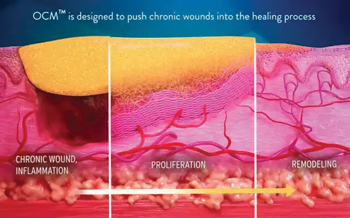
The ocean biotechnology company develops Omeza Complete Matrix (OCM™)—a first-of-its-kind FDA-cleared regenerative wound care platform built around sustainably sourced, marine-derived ingredients in a water-free, oil-based and malleable matrix. It simultaneously helps reduce bacterial burden, calm inflammation and create an environment where healthy tissue can regenerate.
“We’re accelerating healing by using the properties of marine science. Our technology has the potential to open up new possibilities in wound care,” says Cynthia Flowers, CEO.
Healing Without the Usual Trade-offs
Water-free formulation of OCM™ helps avoid creating conditions that encourage bacterial growth. Natural marine-derived ingredients provide inherent antibacterial activity, including effectiveness against difficult-to-treat organisms such as MRSA and Pseudomonas.
The product’s primary building blocks, hydrolyzed cold-water fish peptides, act as a biological scaffold, providing the structural framework needed for new tissue to anchor and gradually rebuild. This becomes especially important in deep chronic wounds, where large areas of damaged tissue must be regenerated. Early collaborative research with the University of Miami indicates healthier tissue remodeling. Omeza believes this effect may also have implications for scarring, an area it plans to study further.
The formulation also incorporates pharmaceutical-grade components, which contain high concentrations of natural anti-inflammatory compounds. These naturally occurring substances help reduce inflammation, promote wound healing and also contribute antibacterial activity.
-
We're accelerating healing by using the properties of marine science. Our technology has the potential to open up new possibilities in wound care.
Chronic wounds are not always flat surfaces. Advanced pressure ulcers and other difficult wounds can tunnel beneath the skin or form irregular sinus cavities, creating spaces that conventional sheet-based products can be difficult to reach. The malleable formulation of OCM™ is designed around that three-dimensional reality. Clinicians can simply apply the formulation directly from the vial into the cavities. Within minutes, the formulation spreads to coat the entire wound bed, including irregular crevices and hard-to-reach spaces. The same formulation can also be smoothed over the fragile tissue surrounding the wound. Applying on the new fragile healing tissue surrounding the wound assists in making this tissue stronger and less prone to breakdown. This application is straightforward and helps clinicians treat wounds of varying shapes and depths with greater ease.
Adding to its practicality, OCM™ does not require refrigeration or specialized storage facilities, allowing clinics to store and handle it without the logistical challenges typically associated with tissue-based products. Since it is neither derived from human tissue nor from conventional animal-derived grafts, healthcare providers also avoid many of the religious or ethical discussions that can accompany other wound care therapies.
“Our goal is to develop technologies that work with the body’s natural healing process while making treatment easier for both clinicians and patients,” says Flowers.
Harnessing the Ocean’s Healing Potential
Ingredients used are sustainably sourced from responsibly managed North American fisheries. No fish are harvested specifically for Omeza's products. It utilizes byproducts from fish that are already being processed for human consumption, making productive use of materials that would otherwise go unused.
Each production cycle takes nearly three months to complete. After carefully combining the ingredients, the formulation is allowed to stabilize before entering multiple stages of quality testing. Once filled into sterile vials, additional sterility testing is performed to ensure the finished product remains free from endotoxins and pyrogens that could cause irritation or discomfort when applied to wounds. Multiple testing points are built into the process to manage sterility and ensure the natural components remain suitable for wound application.
Supporting this manufacturing platform is an expanding portfolio of international patents that protect both the technology and the proprietary production methods.
Creating a Platform for the Future
OCM™ has received FDA 510(k) clearance as a drug-device combination product, distinguishing it from tissue-based wound care products. To expand access through both public and private healthcare systems, Omeza is conducting randomized controlled clinical trials in diabetic foot ulcers and venous leg ulcers. It has completed a prospective real-world evidence study across chronic wound types. The study included elderly Medicare beneficiaries with multiple comorbidities and other high-risk groups that are often underrepresented in wound care studies. The findings have shown encouraging healing outcomes, even in wounds that had previously failed to respond to advanced therapies.
 While OCM™ represents Omeza’s first commercial technology, the company’s ambitions extend beyond a single product. Recent improvements have enabled the product to be used within fully sterile operating room environments, opening new opportunities in surgical wound care. The company is also exploring additional product sizes to accommodate small surgical sites to extensive chronic ulcers, along with future technologies that may be applied in animal health as well.
Backing these ambitions is a recently completed Series A financing round supported by institutional investors focused on sustainable biotechnology and the blue economy. The funding is accelerating randomized controlled trials while laying the groundwork for broader reimbursement from private insurers. At the same time, Omeza is pursuing government-funded research opportunities in burns and trauma, including potential military applications where a portable, easy-to-apply regenerative therapy could make a meaningful difference.
The larger mission is not to introduce another wound care product. Omeza is working to ensure that regenerative wound care moves beyond incremental improvements and toward a future where better healing becomes both simpler and more accessible, earning it the distinction of Wound Healing Technology of the Year 2026.
A Better Fit for Hard-to-Heal Wounds
Chronic wounds rarely present in neat, predictable shapes. Pressure ulcers can tunnel beneath intact skin, diabetic wounds may extend into irregular cavities and fragile peri-wound tissue can make placement more difficult. For buyers, the ability of a product to conform to the wound is therefore more than a matter of handling. It needs to reach the surfaces requiring treatment without clinicians having to work around the limitations of its form.
Persistent bacterial burden can make these wounds even harder to manage, while repeated antibiotic exposure brings limitations of its own. When evaluating a technology, buyers need to understand how it manages the local wound environment while also supporting tissue repair. The two cannot be considered in isolation. The physical form of the product plays a role here as well. Sheet-based products can be difficult to position against deep or irregular surfaces, especially when a wound includes tunneling or sinus tracts.
The evidence behind the product also needs to reflect the patients likely to receive it. Chronic wound populations are often clinically complex, and older adults may have multiple comorbidities and lengthy treatment histories. Research drawn from narrowly defined populations may therefore tell buyers less about how a product will perform in difficult wounds. It is important to look at evidence involving relevant patients and wound types while also recognizing the difference between prospective real-world evidence and randomized controlled trial data.
That evidence has implications for reimbursement as well. Even a promising technology can have limited practical reach when coverage requirements prevent routine use across payer populations. The depth of supporting research becomes particularly important as a product moves beyond Medicare-focused use toward wider private coverage, where expectations for randomized trial evidence may be more demanding.
“Omeza Complete Matrix’s malleable, water-free format is designed to conform to irregular wound beds, including tunnels and sinus cavities, while cold-water fish peptides provide a scaffold for tissue growth.”
How the product works in day-to-day care matters alongside its biological mechanism. Refrigeration and specialized storage can make use more difficult in home care and outpatient clinics. The application also needs to remain manageable for clinicians outside major wound centers, particularly when material has to reach crevices or be placed around fragile tissue at the wound edge. Surgical use introduces additional sterility requirements, bringing packaging and handling into the purchasing decision. Buyers also need to consider whether the product can move from one care setting to another without requiring different storage procedures or additional preparation.
The source of the material can influence whether patients and care settings are comfortable using it. Products derived from human or animal tissue may raise religious or patient-preference concerns in some settings. Marine-derived materials avoid several of those issues, although sourcing controls and sterility testing still need to be examined. Natural inputs also make manufacturing consistency important because the materials require repeated quality checks before release. Their natural origin does not lessen the need for disciplined process control.
Omeza addresses these requirements with Omeza Complete Matrix, or OCM, an FDA-cleared drug-device wound matrix made from marine-derived components. Its malleable, water-free format is designed to conform to irregular wound beds, including tunnels and sinus cavities, while cold-water fish peptides provide a scaffold for tissue growth. The formulation also contains pharmaceutical-grade marine lipids intended to support inflammation control and wound repair. OCM comes in single-use vials, requires no refrigeration and can be applied across both the wound bed and peri-wound area. For organizations evaluating regenerative wound-healing technology, its wound conformity, straightforward handling, clinical evidence and ongoing randomized trials provide a practical combination of features to consider.
...Read more
Wound Healing Technologies Info
Q1
What Does Wound Healing Technology Need to Address in Chronic Care?
Wound Healing Technology must do more than cover an injury. Chronic wounds can involve persistent inflammation, bacterial burden, fragile surrounding tissue and areas that are difficult to reach. Effective approaches therefore need to support the wound environment while helping new tissue form and remain stable. Practical design also matters because clinicians may be working with tunnels, cavities or irregular wound beds that make conventional flat products harder to position consistently. Ease of application can influence continuity of care as well.
Q2
How Does Omeza Approach Difficult-to-Treat Wounds?
Omeza applies Wound Healing Technology through Omeza Complete Matrix, a regenerative wound matrix built around marine-derived ingredients. The FDA-cleared drug-device product uses a water-free, oil-based and malleable formulation that can conform to irregular wound surfaces. Hydrolyzed cold-water fish peptides provide a scaffold for tissue growth, while other pharmaceutical-grade components support inflammation control and wound repair. Its format is intended to combine several healing functions within one application rather than requiring separate materials for every treatment objective.
Q3
Why Do Form and Handling Matter in Regenerative Wound Care?
The physical form of Wound Healing Technology can affect whether treatment reaches the areas that need support. Deep wounds may include crevices, tunnels or sinus cavities that are difficult for sheet-based materials to contact evenly. A conformable wound matrix can better follow three-dimensional surfaces and help clinicians apply material around fragile tissue. Storage requirements also influence routine use, particularly when products move between different treatment environments. Simpler handling can reduce unnecessary logistical barriers without replacing the need for clinical judgment.
Q4
What Evidence Matters When Evaluating Advanced Wound Solutions?
Evidence for Wound Healing Technology should be considered alongside the types of wounds and patients represented in the research. Prospective real-world studies can show how a product performs in everyday care, while randomized controlled trials can provide a different level of clinical comparison. Buyers should also examine how evidence supports practical adoption, including coverage considerations, use across complex chronic wounds and the consistency of outcomes in difficult treatment situations. Study design, patient complexity and relevance to intended use all affect how findings should be interpreted.
Q5
How Does Omeza Support Practical Use Across Care Settings?
Omeza designs its Wound Healing Technology with handling and storage considerations in mind. Omeza Complete Matrix is supplied in single-use vials, can be applied into irregular wound spaces and does not require refrigeration or specialized storage. Its marine-derived ingredients are sourced from fish already processed for human consumption, and production includes multiple quality and sterility testing stages. The product has also been adapted for use in fully sterile operating room environments, extending the same matrix format into another controlled care setting.
Q6
What Should Organizations Consider When Assessing Wound Care Innovation?
Organizations evaluating Wound Healing Technology should look at biological function, usability, evidence and manufacturing controls together rather than treating them as separate issues. Important questions include whether a product can reach complex wound shapes, support tissue regeneration, manage the local wound environment and fit normal storage and application routines. Regenerative wound care is most practical when clinical performance is paired with consistent production, straightforward handling and evidence relevant to real treatment conditions. A balanced evaluation should consider both therapeutic potential and day-to-day implementation.
Company
Omeza
Management
Cynthia Flowers, CEO, Omeza
Description
Omeza is an ocean biotechnology company advancing regenerative wound care through marine-derived innovations. Its flagship technology, Omeza Complete Matrix (OCM™ ), combines antibacterial, anti-inflammatory and tissue-regenerative properties within a single water-free formulation to simplify chronic wound management. Backed by clinical research, the company is redefining healing through science, sustainability and biotechnology.