


THANK YOU FOR SUBSCRIBING
Weekly Brief
Be first to read the latest tech news, Industry Leader's Insights, and CIO interviews of medium and large enterprises exclusively from Healthcare Tech Outlook

Spectros Medical Devices
Ensuring Vascular Performance Through Continuous, Non-Invasive Monitoring

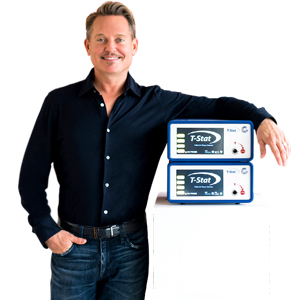 Rob Pupelis, CEO, Spectros Medical Devices
Harnessing this technology, Spectros Medical Devices, a leader in non-invasive sensing and remote monitoring, is changes the way medical care is delivered around the world. It adopts the ground-breaking use of white LEDs in small, non-invasive sensors that improve patient outcomes through continuous monitoring. These advanced molecular sensing devices and software shed light on tissue health and diseases related to vascular performance, aiding in early detection, speedy diagnosis, real-time therapies, reduced complications, and overall costs.
Conventional free-flap monitoring methods are highly subjective and observer-dependent. Even for experienced clinicians, flap monitoring can be challenging and subject to errors. Wearable spectroscopy devices for flaps have eliminated many of these shortcomings and greatly improved success rates, efficiencies, and overall results. They reduce complications and shorten hospital stays after reconstructive microsurgeries.
"Tissue doesn’t die from the center to outward. Necrosis (tissue death) is first noticed as an immediate decrease of oxygen in the capillary bed and so begins at the surface edges of tissue. Contrary to other technologies that use infrared spectroscopic imaging and read much deeper into the tissues (at their center), T-Stat uses visible light spectroscopy to read the surface of the tissue. This allows for the earliest detection and intervention to prevent complications," says Rob Pupelis, CEO of Spectros Medical Devices.
Continuous Monitoring with the T-Stat System
The ideal monitoring technique must be safe for the patient, accurate, reliable, easy to use, but also cost-effective. Spectros Medical Devices' T-Stat Monitoring System addresses these requirements, and more to increase the success rates. This also equates to happier patients that have been through traumatic experiences, such as Breast Cancer.
T-Stat provides continuous, non-invasive, and localized measurement(s) that are sensitive to regional and global cerebral ischemia. The oximeter’s broad-band white light technology, coupled with fiber optic spectroscopy, produces data within two standard deviations of the mean. This near-absolute value provides an accurate representation of flap perfusion at the microvascular level.T-Stat readings represent immediate oxygen consumption in the skin island, which directly correlates to arterial and venous flow.
The system is non-invasive, does not harm the tissue or anastomosis, and is easy to place.
Surface sensors, used often in Breast Reconstruction, are attached to the skin or dermis, read into the capillary bed and keeping track of the hemoglobin and tissue oxygen saturation in real-time. These sensors are commonly utilized in DIEP and TRAM flaps. “Surgeons place our device intraoperatively to monitor the health of the tissue and ensure there are no problems while replanting the tissue during surgeries. It also gives them a baseline for how healthy the tissue should read when they end the surgery,” says Pupelis. “The device will continue to remain on the patient through their journey out of the OR into the recovery area and to the ICU or postoperative room. Throughout the duration of their stay at the hospital, which can range from two to seven days, alerting the surgeon of a potential problem at any time.”
Spectros Medical Devices' T-Stat Monitoring System comprises the T-Stat VLS Tissue Oximeter and a sensor that is specifically designed for three applications. Each sensor of the T-Stat Monitoring System contains a white LED light that illuminates the tissue in the capillary bed. The signal is then returned through a fiberoptic bundle for real-time spectrographic analysis.
-
With 20 Years Of Experience In The Reconstructive Market, We Understand That The More Complex The Product, The Greater The Need For Support. Our T-Stat Representatives Work With All Departments To Provide Training Tailored To Each Department's Personnel
Surface sensors, used often in Breast Reconstruction, are attached to the skin or dermis, read into the capillary bed and keeping track of the hemoglobin and tissue oxygen saturation in real-time. These sensors are commonly utilized in DIEP and TRAM flaps. “Surgeons place our device intraoperatively to monitor the health of the tissue and ensure there are no problems while replanting the tissue during surgeries. It also gives them a baseline for how healthy the tissue should read when they end the surgery,” says Pupelis. “The device will continue to remain on the patient through their journey out of the OR into the recovery area and to the ICU or postoperative room. Throughout the duration of their stay at the hospital, which can range from two to seven days, alerting the surgeon of a potential problem at any time.”
Endoscopic sensors are designed to be used in the channel of an endoscope for assessing the local perfusion of the GI tract. With the additional information provided by T-Stat during endoscopy, real-time treatments and therapies may be incorporated at a time when access is otherwise limited.
As a surrogate for GI perfusion, an intraoral sensor fits into the mouth, from neonates to adults, to monitor the saturation of the buccal mucosa and instantaneously measure how medications affect patients with sepsis or other life-threatening medical emergencies.
Spectros Medical Devices also offers a remote viewing web-based application, called OnCall, that provides remote viewing of T-Stat readings in real-time from anywhere. The data is safe, HIPAA compliant, and readily available to the surgeon or caregiver.
Building High Success Rates Through Customer-Centricity
The team at Spectros Medical Devices has always focused on improving patient outcomes, advancing technology, and providing the highest level of service.
To achieve these goals, they foster good relationships with their surgeons and offer ongoing support through training and education to medical and supporting staff in hospitals.
The overarching mission of Spectros Medical Devices is to establish their technology as the standard of care while maintaining continued innovation. A spirit of constant innovation has helped the company avoid instances of false positives and build their success around accuracy and reproducibility.
“With 20 years of experience in the reconstructive market, we understand that the more complex the product, the greater the need for support. Our T-Stat representatives work with all departments to provide training tailored to each department's personnel. For instance, training of bedside nurses, focuses on the device in conjunction with the patient's recovery, without overwhelming them with device set-up or interpreting readings. We respect everyone's time and only provide information that is relevant from each perspective,” says Pupelis.

We Believe Patient Education And Ensuring Shared Decision Making Are Vital To That End. Awareness And Education Are Crucial For These Devices To Be Part Of The Managed Care System. This Further Impacts The Viability Of Technology And Developments In The Field Of Monitoring Devices Such As Ours

The overarching mission of Spectros Medical Devices is to establish their technology as the standard of care while maintaining continued innovation. A spirit of constant innovation has helped the company avoid instances of false positives and build their success around accuracy and reproducibility.
With a few iterations of the T-Stat, Spectros Medical Devices has now released their next-gen T-2.0 device, which has creature comforts and tightened specs for superior quality. This includes modified sensors and applicators to provide surgeons with improved ways of utilizing them. The team is also developing accessories designed to assist in reading buried flaps and thereby enhance the aesthetic appeal of the surgical outcomes.
Spectros Medical Devices firmly believes that health tech companies should come together as a healthcare community to facilitate change. This involves gathering feedback from the physician-patient healthcare network and key opinion leaders to effectively address healthcare pain points. The company is also actively working with non-profit organizations in an effort to educate patients to demand technology that improves their surgical outcomes. “We believe Patient Education and ensuring Shared Decision Making are vital to that end.”
“Awareness and education are crucial for these devices to be part of the managed care system. This further impacts the viability of technology and developments in the field of monitoring devices such as ours” says Pupelis. #AskForT-Stat
Company
Spectros Medical Devices
Management
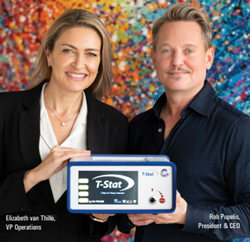
Rob Pupelis, CEO, Elizabeth van Thillo, VP Operations, Spectros Medical Devices
Description
Spectros Medical Devices Inc. makes advanced molecular sensing devices and software that shed light on tissue health and disease related to vascular performance. The medical devices utilize innovative optical technologies that speed diagnosis, enable real-time therapies, reduce complications, and lower costs.
-(3)-1.jpg)

