


THANK YOU FOR SUBSCRIBING
Weekly Brief
Be first to read the latest tech news, Industry Leader's Insights, and CIO interviews of medium and large enterprises exclusively from Healthcare Tech Outlook

Synergy Billing
Leading Non-Profit Community Health Clinics to Profitability and Sustainability

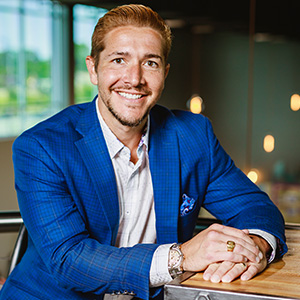 Jayson Meyer, CEO, Synergy Billing
Since their inception in 1965, Federally Qualified Health Centers (FQHCs), also known as Community Health Centers (CHCs), have played a pivotal role in providing high-quality, accessible primary healthcare to millions, regardless of their financial status. In 2023, these centers served over 30 million individuals but managed to collect less than 66 percent of their billing charges. This alarming figure prompts critical inquiries— why is the collection rate so low, and how do these centers sustain their operations?
The challenge of low collection rates is exacerbated by the high frequency of insurance claim denials. According to the Medical Group Management Association (MGMA), one out of every three medical claims submitted to health insurance companies is denied. Each denial initiates a complex, costly appeals process, with an average additional $25 in labor costs per claim. Most FQHCs, with limited funding and staff resources, struggle to manage these denials effectively.
Synergy Billing, which is dedicated exclusively to FQHCs, has developed a comprehensive revenue cycle management (RCM) strategy that prioritizes data accuracy from the outset. By training front desk staff, optimizing credentialing processes, and employing sophisticated data analysis techniques, the firm ensures that claims are accurate from the start, significantly minimizing denials and increasing cash flow. Its strategic focus on the data pays big dividends, resulting in a 30 percent boost in bottom-line revenue without additional operating expenses.
Jayson Meyer, CEO of Synergy Billing, explains the rationale behind the company’s success, “Insurance companies don’t make money when they pay claims, so they deny them for silly reasons. The secrets lie in the data. Our algorithm uses historical claim data to predict payment and correct claim errors that could prevent payment.” He goes on to say, “With our technology, we can hold insurance companies accountable and create a level playing field between insurance companies and non-profit clinics.”
The Onboarding Process: Stabilize, Systemize, Optimize
Clients at Synergy Billing undergo a three-part onboarding process. The firm initially stabilizes the existing billing processes to identify and address bottlenecks impacting SOLUTIONS PROVIDERS - 2024 TOP 10 MEDICAL BILLING AND CODING profitability. The company then standardizes operations by implementing best practices according to the health center’s specific needs. In addition, each client is assigned a revenue cycle manager to optimize their technology and ensure that claims are accurately submitted. This structured approach has proven effective, with most clients seeing substantial improvements within 60 days.
The team at Synergy Billing is a blend of passion, technical skill, and deep industry knowledge. Their robust composition— ranging from training specialists to expert billers—enables the firm to handle any challenge that comes their way.
Their expertise directly translates into faster claim processing, fewer denials, and better financial health for the clients.
Another affirmation of Synergy Billing’s effectiveness comes from Northeast Oklahoma Health Services. Scott Rosenthal, CEO, shares his experience, “Synergy Billing’s approach to eliminating insurance denials has been crucial for us. With a dedicated revenue cycle manager, they have continuously found ways to enhance our revenue.” Under Synergy’s guidance, Northeast Oklahoma Health Services has not only stabilized but thrived, boasting over 12 months of cash reserves.
Impact through Success Stories
Needless to say, Synergy Billing has transformed precarious financial situations into stories of triumph for multiple clients. One compelling example is a health center that was on the brink of financial distress. With only three days of cash reserves and a backlog of unprocessed denials and receivables, the center faced daunting challenges. The turning point came when they enlisted Synergy Billing. In just a year of partnership, the center witnessed a remarkable 30 percent surge in collections.
The journey from instability to financial health did not stop there. Over the following years, the center’s financial position strengthened significantly, with cash on hand expanding, increasing from three days to an entire year. This dramatic improvement underscores the long-term effectiveness of Synergy Billing’s strategic interventions.
-
Insurance companies don’t make money when they pay claims, so they deny them for silly reasons. The secrets lie in the data. Our algorithm uses historical claim data to predict payment and correct claim errors that could prevent payment
These success stories highlight the tangible return on investment that Synergy Billing offers to its clients. Beyond just covering costs, its services significantly bolster healthcare organization’s financial robustness, proving that it is not just a solution but a pathway to financial empowerment.
A Service That Pays for Itself
Synergy Billing’s fee structure is performance-based and contingent upon the collection from insurance companies. It charges a percentage of what it collects, which is typically offset by the increases in collected monies. “The average health center is only 66 percent effective at converting billed charges into payment. We increase their effectiveness by getting more of their medical claims paid faster. This brings in more cash, resulting in an ROI that is over and above Synergy’s service fees,” reports Meyer. The company also offers a warranty that guarantees at least 85 percent collection effectiveness for CMS claims. For an FQHC operating at average billing effectiveness, engaging with Synergy Billing’s services results in a remarkable 21 percent return on their investment.
As Synergy Billing looks to the future, it plans to expand its reach. “If everyone in healthcare gets paid for the services they render, healthcare won’t cost as much. Our vision is ‘Zero A/R in Healthcare.’ We will relentlessly pursue a level playing field for insurance payers, clinicians and patients,” Meyer states with conviction. This bold vision reflects a broader commitment to leveling the playing field in healthcare billing and making services more affordable and accessible.
Operating from a 25-acre campus in Holly Hill, Florida, the company has the capacity and determination to be the trusted partner for all of America’s Community Health Centers. By addressing systemic issues with tailored, technology-driven solutions, Synergy Billing enhances FQHCs’ operational efficiency and plays a critical role in the broader context of healthcare accessibility.

Company
Synergy Billing
Management
Jayson Meyer, CEO, Synergy Billing
Description
Full-service revenue cycle management firm providing billing, credentialing, and training solutions for Community Health Centers.


