THANK YOU FOR SUBSCRIBING
Weekly Brief
Be first to read the latest tech news, Industry Leader's Insights, and CIO interviews of medium and large enterprises exclusively from Healthcare Tech Outlook


The conventional approach to cancer drug development is rooted in the idea of eliminating or destroying cancer cells and associated malignant elements. While this approach does target the cancer, it often comes with collateral damage like tissue damage, a weakened immune system, long-term health consequences, pain and discomfort, cognitive effects, along with psychological and emotional impacts. These side effects can be harmful to patients and lead to various adverse reactions and complications. The pharmaceutical industry’s ongoing research seeks to enhance the precision and efficacy of these therapies and minimize side effects.
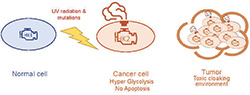
In the context of cancer, which is hyperglycolytic (Warburg Effect), attempting to intervene by inhibiting glycolysis, that is, sugar metabolism, results in numerous side effects that make drug development infeasible. This hyperglycolytic characteristic of cancer, however, is today well exploited and the basis of a pan-cancer diagnostic tool: The PET-Scan.

With this key understanding, Vidac Pharma is on a quest to address the root cause of diseases more efficiently and simultaneously develop less harsh drugs for patients.
“Our way to cure cancer is by targeting the tumor microenvironment and returning cancer cells to normal metabolism through a new paradigm in AI-derived drug discovery, the Toposteric Effect,” says Max Herzberg, founder, CEO, and chairperson of Vidac Pharma.

Cellular Organization and Disease Development
As cells are highly organized entities where the proper functioning of each component is crucial, the company identifies disruptions in cellular organization, particularly enzymes ending up in the wrong compartments, as a factor leading to diseases. Pertaining to cancer, this results in the Warburg effect, where cancer cells exhibit heightened sugar consumption due to increased activity of the HK2 enzyme. Excessive HK2 disrupts normal cellular processes by binding to mitochondria, hindering energy production and promoting glycolysis. The resulting metabolic changes, along with elevated HK2 levels blocking the mitochondrial pore VDAC, contribute to evading programmed cell death (apoptosis) in cancer cells. This uncontrolled cell proliferation leads to tumor development. Increased sugar consumption also creates an acidic tumor microenvironment, impairing the immune system's ability to combat cancer.
Instead of attempting to destroy a problematic enzyme found in the wrong location, Vidac Pharma has found a way to displace it. This strategy involves screening for small molecules, carefully designed through AI and comprehensive chemical screenings. These molecules modify the enzyme's structure without affecting its functionality. The critical aspect of its activity site is shared with normal enzymes, such as HK1, HK2, and others that utilize sugars. The goal is to identify molecules that could alter the enzyme's binding site, shifting it away from the mitochondria. By relocating the enzyme from its erroneous position, the company’s approach allows essential cellular components to exit freely, restoring the cell to its normal metabolic state.
The Toposteric Effect is at the core of Vidac Pharma’s approach. It involves altering the structure of an element inappropriately bound in the wrong location.
Based on this principle, the company has developed a drug that progressed to phase two clinical trials and is effective in treating nonmelanoma skin cancer, a highly prevalent form of cancer worldwide, especially in regions like Australia, New Zealand, and northern countries where sun exposure is common.
Vidac Pharma has also created new molecules that demonstrate efficacy in solid tumors, such as lung and breast cancer, which are often resistant to conventional drugs and associated with numerous side effects. Its approach involves using its drug to create a pro-immunological environment and combining it with immuno-oncology medications. This lowers chemotherapy doses and reduces side effects. In essence, it aims to offer a more patient-friendly, non-violent therapy to minimize suffering—the company’s core mission. Drugs for these solid tumors are now in the advanced preclinical stages of development and are compatible to be used as stand-alone and/or in combination with other treatments.
Other significant medical conditions for which Vidac Pharma has demonstrated the effectiveness of its drugs are squamous cell carcinoma, a type of skin cancer, and cutaneous T-cell lymphoma (CTCL), which affects T-cells beneath the skin. It is currently in the midst of phase two trials for these conditions.
Global Collaboration and Strategic Approach
Vidac Pharma takes a strategic approach where it relies heavily on subcontractors who possess the required machinery and capabilities.
“Utilizing subcontractors is, in itself, an art. Our management team is fantastic in this respect. It involves ensuring their motivation, making one’s company an attractive choice, ensuring their precise alignment with the company’s requirements, and occasionally benefiting from their insights,” says Herzberg.
Vidac Pharma has discovered that this approach is far more cost-effective than establishing and maintaining a high capital expense comprehensive operation. It maintains a lean organization, with only five to six full-time employees dedicated to science and technology, while the rest of the work is outsourced to subcontractors. These core team members effectively manage subcontractors and collaborations with universities. The company’s partnerships extend globally, including a significant collaboration with a leading research hospital in Israel, another partner in France, and several others worldwide. This unique approach is reflected in its financials, resulting in considerably lower burn rate compared to many of its peers.
Vidac Pharma has established a collection of innovative product candidates focused on addressing substantial medical needs within the fields of oncology and dermatology. Lead Drug 1, VDA-1102 ointment is currently undergoing development under an investigational new drug (IND) application from the FDA, intended for use as a topical treatment for various types of skin cancers. The completion of a Phase 1 study in healthy olderadult volunteers, employing a randomized, double-blinded, placebo-controlled, dose-escalation approach, revealed no safety concerns.
VDA-1102 actinic keratosis (AK) has successfully concluded a Phase 2B trial in 2019. The results demonstrated a 40 percent complete clearance and an 80 percent reduction in lesions for 50 percent of the participants. The formulation exhibited good skin permeability. A Phase 2C, featuring inclusion criteria of the most dangerous form of lesions, is scheduled for late 2023 or early 2024.
Given the exceptional safety profile observed in the Phase 2B trial for AK, Vidac Pharma obtained permission in Europe to directly proceed to a Phase 2 trial for Cutaneous T-Cell Lymphoma (CTCL). This Phase 2 trial commenced in December 2020 under the Ministry of Health of Israel at Beilinson Hospital and is expected to continue through 2023-2024.
Similarly, Lead Drug 2, VDA 1275, represents a novel chemical family identified through artificial intelligence (AI) analysis rooted in a thoroughly researched mode of action (MOA). Demonstrating over 100 times greater activity, it has been specifically formulated for systemic administration through intravenous (IV), intramuscular (IM), and per-oral (Per-Os) routes. Currently in advanced pre-clinical stages, it is being investigated for standalone application in solid tumors. Besides, ongoing research and development focus on its potential use in combination with classical chemotherapy, CAR-T and other immunological and cell-based treatments within the context of solid tumors and the tumor microenvironment.

Utilizing subcontractors is, in itself, an art. Our management team is fantastic in this respect. It involves ensuring their motivation, making one’s company an attractive choice, ensuring their precise alignment with the company’s requirements, and occasionally benefiting from their insights

Given the exceptional safety profile observed in the Phase 2B trial for AK, Vidac Pharma obtained permission in Europe to directly proceed to a Phase 2 trial for Cutaneous T-Cell Lymphoma (CTCL). This Phase 2 trial commenced in December 2020 under the Ministry of Health of Israel at Beilinson Hospital and is expected to continue through 2023-2024.
-
Our way to cure cancer is by targeting the tumor microenvironment and returning cancer cells to normal metabolism through a new paradigm in AI-derived drug discovery, the Toposteric Effect
Similarly, Lead Drug 2, VDA 1275, represents a novel chemical family identified through artificial intelligence (AI) analysis rooted in a thoroughly researched mode of action (MOA). Demonstrating over 100 times greater activity, it has been specifically formulated for systemic administration through intravenous (IV), intramuscular (IM), and per-oral (Per-Os) routes. Currently in advanced pre-clinical stages, it is being investigated for standalone application in solid tumors. Besides, ongoing research and development focus on its potential use in combination with classical chemotherapy, CAR-T and other immunological and cell-based treatments within the context of solid tumors and the tumor microenvironment.
These outcomes demonstrate that Vidac Pharma is driven by a fervent dedication to translating cutting-edge scientific discoveries into innovative therapies that can address pressing unmet medical requirements.

Company
Vidac Pharma
Management
Max Herzberg, Founder, CEO, and Chairperson, Vidac Pharma
Description
Vidac Pharma is emerging as a transformative force in the cancer drug discovery process. As a clinical-stage company specializing in cancer therapy, is coming up with a radically distinct approach from the conventional methods used in developing drugs against cancer.