


THANK YOU FOR SUBSCRIBING
Weekly Brief
Be first to read the latest tech news, Industry Leader's Insights, and CIO interviews of medium and large enterprises exclusively from Healthcare Tech Outlook
Healthcare Tech Outlook: Specials Magazine

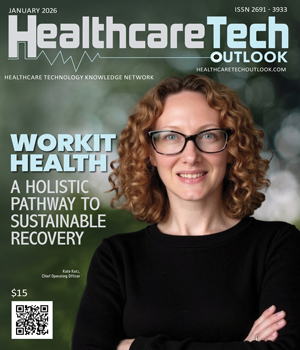
Workit Health
A Holistic Pathway to Sustainable Recovery
What makes Workit Health’s evidence-based addiction recovery feel reachable for people facing opioid or alcohol use challenges? Addiction recovery begins the moment help feels reachable. For millions living with opioid or alcohol use disorders, the barriers of traditional treatment can make help feel out of reach. Workit Health bridges this accessibility gap and makes recovery possible by providing virtual, evidence-based treatment for substance use through a person-centered and holistic model of care. How is Workit Health’s integrated virtual care model structured to support stigma-free recovery? Workit’s defining differentiator is fast, stigma-free access to integrated support, where medical care, the guidance of behavioral health professionals, and peer connection work together from the privacy of one's own home. Shaped by a decade of expertise and a patients-as-designers philosophy, the evidence-based care is accessible through a secure, user-friendly application that helps members engage seamlessly. “Every person deserves a pathway to recovery that feels respectful, modern, and clinically sound. That's what we're building at Workit Health,” says Kate Katz, Chief Operating Officer.
Hemaptics
Leverage Data to Impact Transfusion Stewardship
Ethan Cohen, CEO, James L. Hill Jr. MD, MBA, CPE, FASA, FACHE, Chief Operating Officer, University Hospitals Parma Medical Center and Jennifer Dawson, RN, Principal Advisor, System Resource Utilization, University Hospitals
When University Hospitals (UH) of Cleveland set out to improve transfusion management across its system, it faced a challenge shared by hospitals nationwide: transfusions are essential and lifesaving, but they are also widely overused, expensive, and sometimes harmful. Although UH saw major opportunities to reduce unnecessary transfusions, it struggled to find a product to impact clinician behavior or provide current, patient-specific insight to drive safer, evidence-based practice.
Rather than accept this gap, UH built its own solution.
The result was HemaLogiX™, a novel analytics platform that evaluates the appropriateness of every transfusion using patient-level variables and evidence-based guidelines. The platform proved so effective inside UH—cutting transfusions by 30–50 percent and generating $55 million in cumulative savings—that UH licensed the technology to a spin-out company, Hemaptics making the innovation available to health systems nationwide.
“We started with a simple goal: give clinicians the kind of patient-specific insight that actually changes decisions,” says James Hill, MD, COO of UH Parma Medical Center and a founding clinical leader of the project. “Once we saw how powerfully HemaLogiX improved practice at UH, it became clear that other hospitals could benefit in the same way.”
A Patient-Specific Approach Built for Clinical Reality
Traditional transfusion tools rely on static metrics and generic thresholds that miss the complexity of real-world decision-making. By contrast, HemaLogiX integrates more than 80 patient specific data points and applies UH’s proprietary Transfusion Appropriateness Algorithm (TAA) to analyze each transfusion across all four major blood components.
 The platform delivers near-real-time insights, presenting information in a dynamic, intuitive dashboard that is updated daily. Clinicians, quality teams, and administrators can drill down to departments, providers, and individual encounters—with specific attribution ensuring transparency and trust.
“Clinicians trust data when it reflects their exact patient,” says Dr. Hill. “HemaLogiX provides that level of context, so the feedback is relevant and actionable.”.
The platform delivers near-real-time insights, presenting information in a dynamic, intuitive dashboard that is updated daily. Clinicians, quality teams, and administrators can drill down to departments, providers, and individual encounters—with specific attribution ensuring transparency and trust.
“Clinicians trust data when it reflects their exact patient,” says Dr. Hill. “HemaLogiX provides that level of context, so the feedback is relevant and actionable.”.

Virtual Addiction Treatment Application Solution

BobiHealth
Making Pregnancy Safer, Smarter and More Accessible
Dave Esra, Founder and CEO, Ann Villegas, Founder & COO
Pregnancy is a deeply personal and transformative chapter in a person’s life—one that should be filled with hope, joy, and the promise of new beginnings. Yet for many, especially those in rural areas and underserved communities, it is often complicated by worrying questions: Where can I find care? How far is the nearest hospital? What happens if something goes wrong? But even when traditional care is hard to access, support doesn’t have to be. In a world where smartphones are nearly always within reach, technology offers a powerful opportunity to close the gap—and that’s exactly what BobiHealth is doing. BobiHealth is a smart, compassionate companion for pregnant people and their families—designed to deliver realtime, evidence-based guidance right from a user’s phone. Built for accessibility and impact, the platform helps users track their health, monitor symptoms, and make informed decisions with confidence. Whether it’s identifying early signs of common risks like gestational diabetes or preeclampsia, supporting mental health during this emotional time, or offering daily check-ins and timely reminders, BobiHealth empowers users with knowledge, peace of mind, and proactive care—right when they need it. “We are driven by the mission to end avoidable maternal and infant mortality in the world’s most overlooked corners,” says Dave Esra, founder and CEO. “Our app delivers daily check-ins, personalized nudges, and immediate recommendations via smartphone, bridging the maternal care gap and improving health outcomes.” BobiHealth was born from a blend of clinical insight and personal necessity. In 2020, Esra led a team conducting COVID-19 vaccine safety studies for pregnant people and saw firsthand how outdated, paper-based data collection delayed care and obscured critical trends. He realized that by harnessing smartphones for real-time data capture and applying AI to detect early warning signs, maternal health risks could be managed more effectively and efficiently. When his own wife experienced a high-risk pregnancy, the desire to advance this idea became personal. The result: BobiHealth’s mission to create a digital platform capable of supporting every expectant parent—especially those with high-risk pregnancies and those who commonly lack access to equitable care. From the moment a user opens the app, BobiHealth begins building a deeply personalized picture of their pregnancy. First, users complete an initial questionnaire that gathers critical information— such as age, due date, medical history, and other key factors that can affect pregnancy—to generate an individualized risk profile. As the pregnancy progresses, the app continuously collects biometric data—whether synced automatically from a wearable device or entered manually—tracking fetal kicks, blood pressure, heart rate, temperature, steps, weight gain, and more. Using clinical-grade algorithms developed by obstetric, emergency, and mental health specialists, this continuous stream of information is used to detect early warning signs of critical maternal health conditions that can lead to serious complications.
Telemedicine & Telehealth

Brick and Mortar is Dead
Travis Boren, Director, Virtual Care, Northern Arizona Healthcare
Medical Imaging

Rapid Advancements in Radiology
David Facchini, Director of Radiology, Yale New Haven Hospital
Healthcare Risk and Compliance

Navigating the Future of Pharmacy
Amos Chery, Director, Pharmacy Operations and Regulatory Compliance, MedStar Washington Hospital Center
Medication Management

National Proton Center Opens in Collaboration with Children's National Hospital
Jeffrey Dome, Senior Vice President, Children’s National Hospital
Therapy Management Solution

Leading Adaptability on Healthcare Analytics
Laura Shue, Director of Analytics, Community Health System
Therapy Management Solution

Blood Flow Restriction Therapy (BFR): Entering Uncharted Territory
Corbin Hedt, PT, DPT, SCS, CSCS, Senior Physical Therapist, Upper Extremity Athlete Fellowship Director, Houston Methodist
Therapy Management Solution

A Synopsis of Clinical Engineering/ Biomedical Engineering
Dr. Haniff Murray, PhD, Clinical Engineer/Alternate Manager/Researcher, Memorial Healthcare System

IN MY OPINION
Healthcare Risk and Compliance
The Shifting Sands of Healthcare: Why Hospitals Must Prioritize Ambulatory Care
Dr. Dino Scanio, DHA, MPH, Multiservice Hospital Director of Clinics, Driscoll Children’s Hospital

LAST WORD
Healthcare Risk and Compliance
Transforming Radiology: How Cutting-Edge Digital Tools and Smart Diagnostics are Shaping the Future of Patient Care
Cliff DeGraff, M.S.R.S., RT(R), Assistant Director of Radiology, the University of Kansas Health System
IN FOCUS

Blood Transfusion Management: Meeting the Challenges of Today's Healthcare
Blood transfusion management is evolving through technology, regulation, and rising demand, improving safety, efficiency, and traceability while addressing operational challenges and strengthening healthcare delivery worldwide.

Virtual Treatment Platforms: Transforming Addiction Care
Virtual addiction treatment applications in Michigan expand access, engagement, security, and continuity through personalized digital care, analytics, and coordinated support.
EDITORIAL
The Digital Evolution of Healthcare
Healthcare technology is undergoing a decisive shift from episodic care to continuous, data-driven intervention. Rising patient volumes, workforce shortages and cost pressures are forcing providers to adopt digital solutions that extend care beyond hospital walls while improving operational precision within them.
One of the most impactful developments is the rise of virtual addiction treatment applications. As substance use disorders continue to outpace the capacity of traditional, in-person treatment models, digital platforms are expanding access to evidence-based care. These applications integrate teletherapy, remote monitoring, medication-assisted treatment support and behavioral analytics into a single continuum of care. By meeting patients where they are, virtual addiction treatment reduces stigma, improves adherence and enables earlier intervention. For providers, these platforms offer standardized protocols, outcome tracking and the ability to manage larger patient populations without compromising quality.
Equally critical are advances in blood transfusion management solutions. Hospitals operate under constant pressure to ensure blood availability while minimizing waste, errors and compliance risks. Digital transfusion management systems bring real-time visibility across blood inventories, patient matching and transfusion workflows. By integrating with electronic health records and laboratory systems, these solutions enhance traceability, reduce human error and support regulatory compliance.
In this edition of Healthcare Tech Outlook, we spotlight companies that stand out in today’s competitive healthcare tech market by adopting digital platforms that combine clinical rigor with scalability, personalization and real-time decision support.
We have also curated thought leadership articles from industry experts, including Jeffrey Dome, Senior Vice President at Children’s National Hospital and Albert Villarin, MD, FACEP, Vice President, Chief Medical Information Officer at Nuvance Health.
We hope this edition of Healthcare Tech Outlook helps you find the right partner for your requirements.
