THANK YOU FOR SUBSCRIBING
Weekly Brief
Be first to read the latest tech news, Industry Leader's Insights, and CIO interviews of medium and large enterprises exclusively from Healthcare Tech Outlook
A featured contribution from Leadership Perspectives: a curated forum reserved for leaders nominated by our subscribers and vetted by our Healthcare Tech Outlook Advisory Board.

Emplify Health
Building a Culture of Health: Where Technology, Trust, and Community Meet
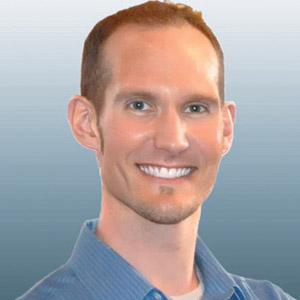
Brian Cleven
Brian Cleven, MS, ACSM-CEP, ATC, AACVPR-CCRP, is a Clinical Exercise Physiologist who leads Cardiac and Pulmonary Rehabilitation and oversees cardiac stress testing at Emplify Health by Bellin Marinette in northeastern Wisconsin. A University of Wisconsin–La Crosse graduate, Brian blends evidence-based practice with lived experience to advance physical activity, mental health, and community wellbeing. A 13-time IRONMAN finisher, he has run at least one continuous mile every day since July 2, 2010. Brian is the founder and one of the directors of the Tri City Event Series, a yearlong, inclusive community initiative serving participants ages 1 to 94 across northeastern Wisconsin and Michigan’s Upper Peninsula. His leadership has earned statewide and national recognition, including the Wisconsin Rural Hospital Association Ambassador Award and ACSM’s 2024 Certified Professional of the Year. Brian has authored and published two children’s books and will compete as an IRONMAN Legacy Athlete at the 2026 World Championship in Hawaii with future aspirations to run 7 marathons in 7 days on all 7 continents.
Communities do not become healthier by accident. They become healthier when people decide together that wellbeing matters, and then build systems, partnerships, and experiences that make participation possible for everyone.
Across Northeastern Wisconsin and the Upper Peninsula of Michigan, the Tri City Event Series emerged from that belief. What began as a collection of community-based events evolved into a unified movement by leveraging technology, data and most importantly, human connection. The result has been measurable growth in participation, deeper community engagement and something harder to quantify, but impossible to miss: a culture of health that feels welcoming, joyful and lasting.
A foundational decision was the creation of a single, shared digital home, a website that united multiple community events under one recognizable umbrella. This simplified access, reduced confusion, and reinforced a shared identity across races, youth events, physical activity challenges and volunteer opportunities. Technology did not replace relationships, it amplified them. By lowering barriers to entry, it allowed more families, first-timers and casual participants to say “yes.”
Equally important was the experience behind the screen. The leadership and planning team drew decades of lived and professional experience from the YMCA, Community Recreation Center, Public Health Department, Healthy Youth Coalition, Healthcare Organizations and local Community Foundations. Each brought a different lens: youth engagement, preventative health, volunteer mobilization, equity, logistics and sustainability. Together, they formed a rare coalition where silos dissolved in service of a shared goal.
The impact was tangible. By aligning calendars, sharing resources, cross-promoting events, and listening carefully to community feedback, participation in some events tripled by living the team’s motto of “In Partnership, We All Win.” Growth was not driven by exclusivity or elite performance, but by intentional inclusion.
“Communities do not become healthier by accident. They become healthier when people decide together that wellbeing matters, and then build systems, partnerships, and experiences that make participation possible for everyone.”
The blueprint was not invented in isolation. The team studied and learned from the success of larger and well-established events such as the Bellin Run, along with innovative regional models like the Titletown Wellness Series and the former DuTriRun Multisport Series. These examples demonstrated that consistency, strong partnerships, clear branding and community trust could turn events into traditions. The lesson was simple: when people feel seen and supported, they return, and they bring others with them. Objective data also played a crucial role. Resources such as the County Health Rankings & Roadmaps helped identify gaps, disparities, and opportunities, grounding the work in evidence rather than assumption. These insights strengthened grant applications and informed program stakeholders. Data was not the destination, but a compass and a guide leading to impact.
Yet the true success of the Tri City Event Series cannot be captured by numbers alone. It lives in the family memories made on race mornings, the pride of a first finish line crossed, the quiet confidence built when someone overcomes a personal challenge and the laughter shared between generations. These events are intentionally designed not for the fastest runners, but for everyone from age 1 to 94, meeting people at their own ability level. Walkers, runners, children, seniors, volunteers, and spectators all belong. Volunteerism is celebrated, not secondary, reinforcing the idea that contribution takes many forms.
Mental health and physical activity are inseparable here. Movement becomes a gateway to connection, resilience and belonging. The finish line is not an end, but a moment of affirmation shared by the community and a reminder that all effort matters.
Each season, the team continues to evolve by combining technology, data and lived experience with deep-rooted community relationships. Growth is intentional, driven by shared values and sustainable. In the end, the most enduring outcome is not an event series, but a shared belief that when communities invest in inclusive experiences, honor human stories and work across sectors, they create ripples that last a lifetime. And perhaps most importantly, they inspire others to pause and ask a simple but powerful question, How can I help leave a positive mark on my community?
The articles from these contributors are based on their personal expertise and viewpoints, and do not necessarily reflect the opinions of their employers or affiliated organizations.