THANK YOU FOR SUBSCRIBING
Weekly Brief
Be first to read the latest tech news, Industry Leader's Insights, and CIO interviews of medium and large enterprises exclusively from Healthcare Tech Outlook
A featured contribution from Leadership Perspectives: a curated forum reserved for leaders nominated by our subscribers and vetted by our Healthcare Tech Outlook Advisory Board.

Chief Information Officer at OU Health
Elevating Healthcare Processes through Technological Integration
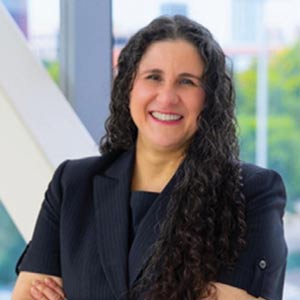
Maria Russo
Maria Russo is the Chief Information Officer (CIO) at OU Health, the recently integrated academic health system for the University of Oklahoma. As OU Health's first CIO, Russo oversees major IT initiatives and service delivery across the newly integrated enterprise. Her achievements include the successful implementation of OU Health’s always-on healthcare-grade network and Epic Electronic Health Record system in June 2023.
Russo has extensive experience in healthcare IT, having served as a healthcare IT consultant at Arthur Andersen, First Consulting Group, Ernst & Young (EY), and Deloitte Consulting. She has managed large-scale Electronic Medical Records (EMR) implementations, developed strategic plans for healthcare organizations, and led IT departments.
Prior to joining OU Health, she was the CIO for Washington University School of Medicine in St. Louis, where she also served as Assistant Vice Chancellor and Deputy University CIO. She held leadership roles at Kaiser Permanente’s Northern California region and other health systems, gaining expertise in healthcare IT strategy and innovation. Russo earned a bachelor’s degree in Management Information Systems from Saint Joseph’s University.
How do you foresee emerging developments in healthcare impacting your ability to meet business requirements effectively?
Emerging developments around generative AI and machine learning are profoundly transforming the healthcare industry. These advancements, when embedded into patient care workflows, act as allies in delivering comprehensive care with real-time data insights. However, AI complements rather than replaces human intervention. Physicians, nurses, and caregivers remain essential to care delivery, and their roles are augmented by AI to enhance efficiency and outcomes.
Can you share your experience from one of the initiatives you recently participated in?
We have undertaken several transformative projects, but the implementation of Epic marked a significant milestone for OU Health. This initiative went beyond adopting a new system—it redefined our approach to healthcare delivery in the 21st century.
The success of the Epic implementation was a result of extensive collaboration with end users and operational teams to develop solutions aligned with their goals and workflows. This approach not only ensured a seamless transition with minimal issues but also fostered a sense of ownership and enthusiasm among stakeholders.
Additionally, we introduced a new enterprise imaging solution and deployed a healthcare-grade network to further enhance our capabilities. These initiatives demonstrate our commitment to leveraging technology to improve patient care, positioning us as leaders in innovation.
"The technical landscape in the healthcare sector is intertwined with technological proliferation, continually advancing. Our ongoing success lies in navigating this digital future in the field. We take a proactive and insightful approach to integrating artificial intelligence and machine learning into our environment, but with a gradual, mindful, and responsible process. This perspective helps us optimize existing tools and processes for better outcomes and enhanced productivity"
What challenges in the healthcare industry cannot be optimally addressed by current services?
One of the significant challenges is the lack of a unified clinical communication platform. No single vendor currently offers a comprehensive, end-to-end solution. While unified solutions can be developed, achieving optimal efficiency remains a hurdle.
In the future, healthcare vendors like Epic and Cerner are likely to integrate end-to-end clinical communication solutions into their software. This integration would streamline operations and significantly enhance patient care delivery.
What suggestions or cautions would you share with peers and upcoming professionals in the healthcare sector?
Integrating artificial intelligence and machine learning into healthcare requires a proactive and thoughtful approach. Leaders must establish robust policies and procedures to ensure responsible implementation, preventing misuse and supplementing medical assessments effectively.
While adopting new technologies, the focus should initially be on improving automation and optimizing existing tools, rather than chasing innovation for its own sake. This approach minimizes risks, eliminates unnecessary costs, and maximizes productivity while fostering meaningful progress as regulations evolve.
The articles from these contributors are based on their personal expertise and viewpoints, and do not necessarily reflect the opinions of their employers or affiliated organizations.