THANK YOU FOR SUBSCRIBING
Weekly Brief
Be first to read the latest tech news, Industry Leader's Insights, and CIO interviews of medium and large enterprises exclusively from Healthcare Tech Outlook
A featured contribution from Leadership Perspectives: a curated forum reserved for leaders nominated by our subscribers and vetted by our Healthcare Tech Outlook Advisory Board.

SSM Health
Moving from "Between a Rock and a Hard Place": A New Approach to Community-Based Research
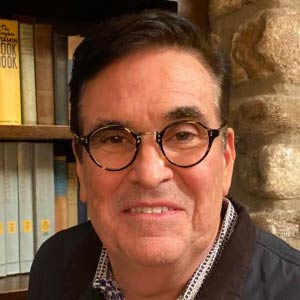
George W. Daneker Jr.
In the current “Golden Age of Oncology,” clinicians and patients are employing transformational systemic therapies, including genomically-targeted drugs, immune checkpoint inhibitors, and novel cellular constructs. While these unprecedented advancements have significantly improved patient outcomes, a constraint exists in the clinical trial process.
Recently, I had lunch with a newly retired medical oncology clinician/researcher. Ron is NIH- trained with a track record of successful community-based oncology research. We got on the topic of clinical trials, especially in community settings. We celebrated the recent advancements, then commiserated over the major challenges. Despite being “between a rock and a hard place” – as Ron said– community-based research has the potential for greater success and more patient impact if the approach is shifted, I believe.
The Big Challenges
In recent years, over 25 percent of Investigational New Drugs (INDs) approved by the FDA have been for cancer. This trend shows no sign of slowing, with about 40 percent of the pharma pipeline focused on oncology. The only pathway for approval of these therapies is through clinical trials.
Unfortunately, less than 8 percent of all cancer patients are offered a clinical trial despite a >50 percent enrollment rate for patients offered trial participation. These numbers are even more dismal for minority populations. If it were easy to do, accruing would not be a problem. But the single-digit rate shows it isn’t. Among the challenges, these weigh the heaviest.
1.Infrastructure Requirements and Investment.
The specialized infrastructure and talent needs for clinical research are substantial: back-office operations to in-clinic provider support, with integrated procedures smoothly linking processes. Back-office talent for areas such as compliance, regulatory, legal, finance, accounting, and IT with experienced managerial oversight are essential but are costly to identify, recruit, and retain – let alone conduct cohesive operations. Putting together an effective team at the scale needed, especially in the current competitive labor market, can take months, or longer.
"In the current “Golden Age of Oncology,” clinicians and patients are employing transformational systemic therapies, including genomically-targeted drugs, immune checkpoint inhibitors, and novel cellular constructs"
To top it all off, financial challenges loom large. While leaders are challenged to “break even,” the prospect of a significant investment in clinical research infrastructure, coupled with a tenuous pro forma on research productivity, is a “bridge too far.”
2.Contacts.
In the high-stakes pharma world, “time is money.” For this reason, sponsors and contract research organizations (CROs), who conduct research operations on behalf of the sponsor, prefer to engage with researchers who have a proven track record of delivering timely, high-quality trial results. Without established relationships, new researchers may find it difficult to attract sponsor or CRO attention, and trial access slow to ramp up.
3.Physicians Buy-In and Sustained Engagement.
Nearly all oncologists fully support clinical trials as a necessary process for new drug approval, in concept. However, in practice – where clinical productivity is paramount – the added work and time commitment to participate in clinical trials is a substantial disincentive to participation.
Efficient workflows are critical to clinical practice. Without research support personnel to help the physician with candidate identification, administrative tasks, and coordination, the clinic productivity grinds to a halt and enthusiasm plummets.
If you and your organization believe that access to clinical research as a standard of care option, what do you do to get out of this tough situation?
A Potential Solution
The efficient and effective conduct of clinical trials is a business imperative for pharma. Savvy research entities have realized the need to conduct clinical research like business, as opposed to a traditional academic model of research as a scientific pursuit.
CROs were created in the 1970s when pharma realized the effectiveness of outsourcing research operations. Although recent regulatory changes have made this less attractive, CROs still manage significant research portfolios for sponsors. A logical extension of outsourcing is an Integrated Research Organization (IRO) which serves researchers like the CRO serves pharma. The IRO can provide services in a variety of settings ranging from individual practices to health systems.
1.Infrastructure and Investment. Partnership with an IRO can bring established back-office operations, experienced personnel, and proven processes, so that your organization is not starting at ground zero. The IRO focuses on key drivers of success: efficiency, tight regulatory processes, and integrated clinical operations.
IROs will have a track record of interaction with CROs and sponsors; they know the space and have insight into favorable contractual terms. In the optimal partnership, the research entity and IRO operate under a shared revenue model supported by pharma. In this model, pharma essentially ends up paying the infrastructure and operational costs with the goal of profitability for the research entity (and obviously IRO). Then, research is not a cost center and potentially contributes to the bottom line– mitigating two major barriers to leadership support.
2.Contacts. Mature IROs have established relationships with sponsors, CROs, and other entities that can broker access to clinical trials. Leveraging the established track record of the IRO, new research entrants can gain favorable attention and earlier access to clinical trials. In addition, IROs can bring digital tools including EHR-based trial matching and clinical trial management systems that facilitate identification and trial operations – which significantly increase the potential for accrual.
3.Physicians. Among its offerings, an IRO can embed personnel, like clinical research coordinators (CRCs) and data managers, on-site to assist with administration and coordination, minimizing physician work, preserving workflows, and sustaining clinic efficiency. Concerns about PI and Co-PI risk are minimized by robust compliance and regulatory functions. Physician compensation for the additional effort required by clinical trials becomes important in diminishing the financial disincentive. Finally, the IRO can offer research training and education to interested but “rusty” potential researchers.
IROs in the marketplace exists with capabilities to meet your organization’s needs.
Be sure to undertake a thorough vetting and formal RFP process. Understand that your relationship with the IRO needs to be a true partnership with mutually beneficial goals and objectives, agreed on from the beginning and actively managed.
My lunch with Ron ended with cautious optimism: the crucial role of clinical research in delivering the promise of new cancer therapies is too important not to find a cleft between “the rock and the hard place.”
Dr. Daneker currently serves as the System Lead for the Oncology Clinical Program at SSM Health. A fellowship-trained surgical oncologist, he has a long history of participating in basic, translational, and clinical research at institutions including Harvard Medical School, UTMD Anderson Cancer Center, Emory University, and the Georgia Institute of Technology. Contact him at https://www.linkedin.com/in/ george-w-daneker-jr-md/.
The articles from these contributors are based on their personal expertise and viewpoints, and do not necessarily reflect the opinions of their employers or affiliated organizations.